Download Product Ebook
 View all our solutions
 Sky-Walker Architecture
 View all our integrations
 Book Protocol workshop
 Our Company
 Contact Us
 View All Our Case Studies
 Become a PSIM Partner
 Become a Sky-Walker PSIM partner today!
 English
 Français
 Nederlands
Don't Have Blind Spots With Sky-Walker

When One Blind Spot Costs €30 Million: Why Multi-Site Detection Is No Longer Optional
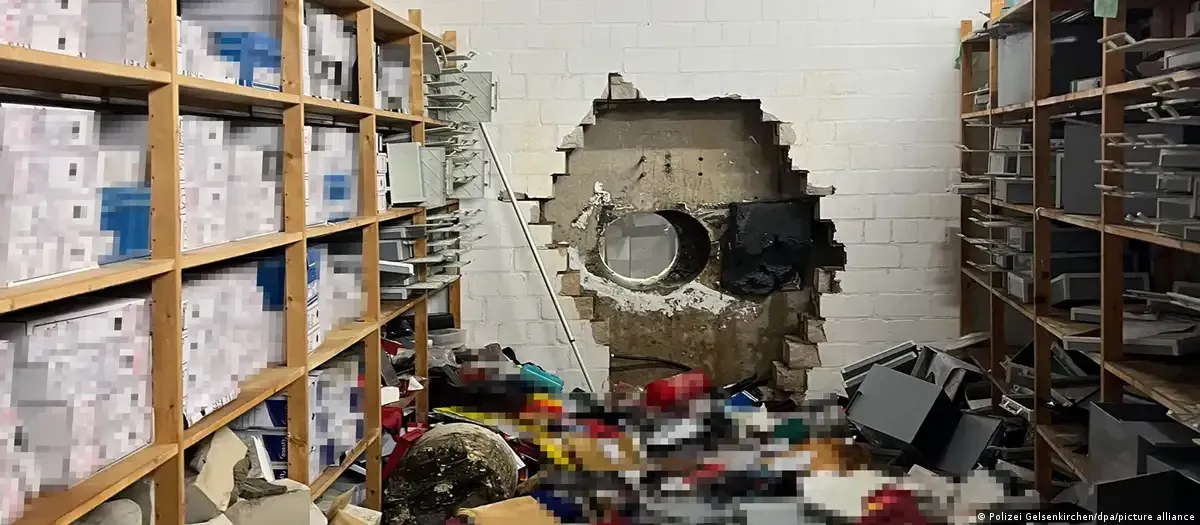
Over the Christmas weekend of 2025, a group of highly organized criminals executed what many have called an “Ocean’s Eleven–style” heist in Gelsenkirchen, Germany. They didn’t smash windows or trigger obvious alarms. Instead, they drilled through reinforced concrete, accessed a bank vault from a parking garage, and quietly opened more than 3,000 safe deposit boxes.
The result? Tens of millions of euros in stolen cash, gold, and valuables, and thousands of customers were left devastated.
But the most striking part of this story isn’t the scale of the theft. It’s how long it went unnoticed.
Despite alarms being triggered earlier, despite the physical scale of the operation, despite the presence of surveillance systems, no one connected the dots in time.
This wasn’t just a crime. It was a systems failure.
reference: https://www.dw.com/en/germany-gelsenkirchen-bank-heist-30-million/a-75344406
The Real Problem: Fragmented Security in a Connected World
If you work in software or IT infrastructure, the pattern should feel familiar.
The issue wasn’t the absence of security systems. The bank likely had:
- CCTV cameras
- Access control systems
- Intrusion detection
- Fire alarms
The problem was that these systems operated in isolation.
When a fire alarm triggered, it didn’t automatically correlate with CCTV feeds. When suspicious activity occurred in the parking garage, it didn’t escalate across systems. When access points were breached, no unified intelligence layer flagged the anomaly.
In other words, the organization had data but no situational awareness.
And in multi-site environments banks, telecom networks, campuses, logistics hubs that gap becomes exponentially more dangerous.
Multi-Site Detection: Where Complexity Becomes Risk
Modern enterprises rarely operate from a single location. Instead, they manage:
- Distributed offices
- Data centers
- Warehouses
- Remote facilities
Each site generates its own stream of events: access logs, video feeds, alarms, sensor data.
Without integration, you’re left with:
- Multiple dashboards
- Multiple vendors
- Multiple protocols
- Multiple points of failure
And critically, no single source of truth.
This is exactly the kind of fragmentation that allowed the Gelsenkirchen heist to succeed.
Enter Sky-Walker: Turning Systems into Intelligence
This is where platforms like Sky-Walker change the equation.
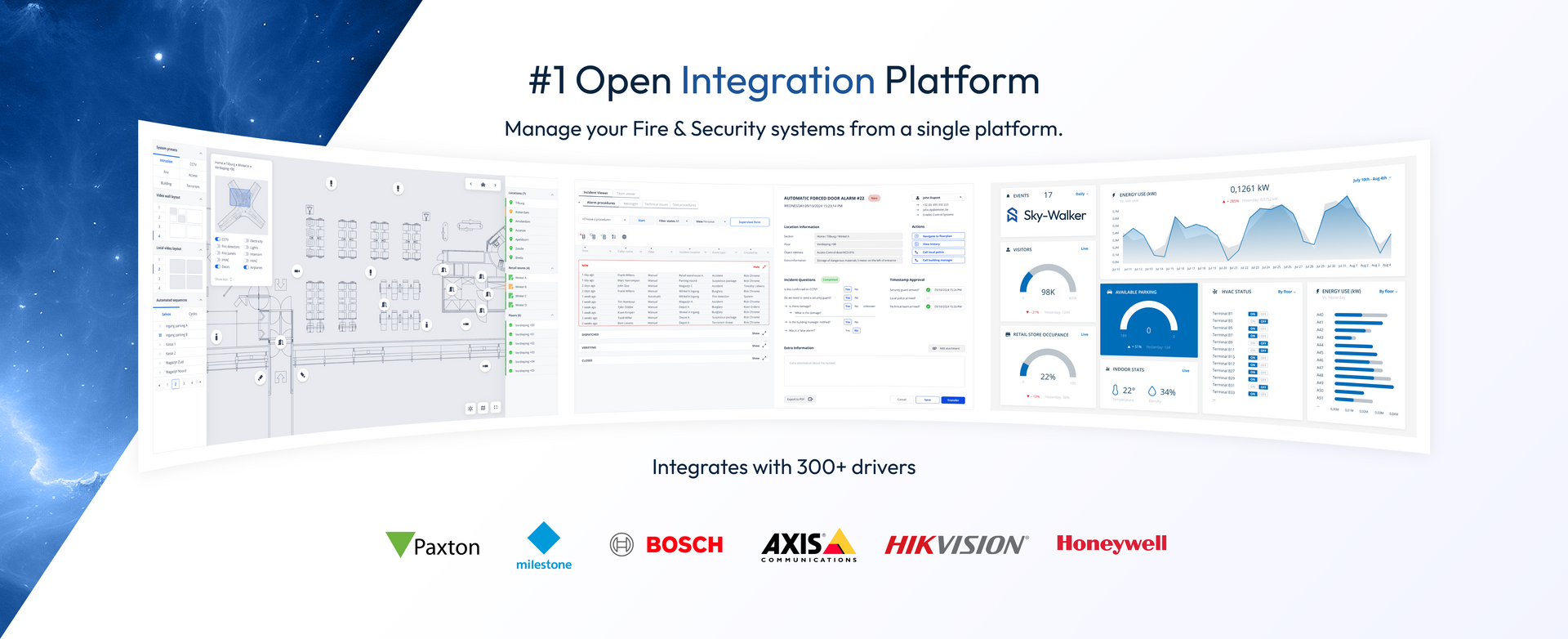
Rather than adding yet another system, Sky-Walker acts as a unified integration layer, bringing together all critical subsystems into one operational view.
Sky-Walker can help with:
1. Access Control
Ensure that only authorized individuals can enter specific areas, with centralized oversight across all sites.
2. CCTV
Transform scattered camera feeds into actionable intelligence, automatically linked to events and alarms.
3. Intercom
Enable real-time communication during incidents critical for coordination and response.
4. Intrusion Detection
Detect and respond to unauthorized access attempts instantly, with system-wide visibility.
5. Control Room Integration
Provide operators with a single interface to monitor, manage, and respond across all locations.
6. Fire Detection
Trigger immediate alerts and correlate them with other systems for faster decision-making.
7. Fire Protection
Automatically activate safety mechanisms sprinklers, lighting, access control within a unified workflow.
The Key Advantage: Correlation, Not Just Collection
What makes this approach powerful isn’t just integration it’s correlation.
Imagine the same heist scenario, but with a unified platform:
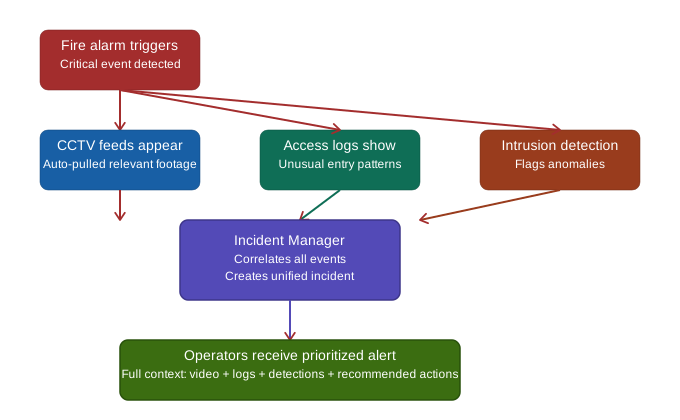
No guesswork. No switching between systems. No delays.
This is what a real-time situational awareness system looks like: systems don’t just report events, they interpret them together.
Why This Matters?
The evolution of software architecture over the past two decades tells a familiar story: monoliths fragmenting into microservices, information silos dissolving into APIs, raw logs transforming into intelligent observability platforms. Security infrastructure is undergoing an identical transformation and for the same reasons.
Traditional security setups still operate like legacy systems: fragmented across vendor boundaries, resistant to scaling, and locked into proprietary ecosystems. Each component access control, CCTV, intrusion detection, and fire systems run in isolation, creating blind spots where sophisticated threats exploit the gaps between them.
Modern security platforms like Sky-Walker apply the principles that transformed software engineering. They treat security infrastructure as a modular, composable system: vendor-agnostic drivers connect disparate systems through standardized protocols, a unified control plane orchestrates real-time responses, and centralized analytics reveal patterns that individual systems could never surface on their own.
At its core, this is a systems engineering discipline applied to physical security. The same architectural thinking that made software reliable, scalable, and maintainable now makes security operations faster, smarter, and more resilient.
The Business Case: Beyond Security
While preventing a €30 million heist is compelling enough, the benefits go further:
- Operational efficiency: One interface instead of many
- Faster incident response: Reduced downtime and risk
- Lower training costs: Simplified operator workflows
- Data-driven decisions: Reporting and analytics across sites
And perhaps most importantly:
You move from reactive security to proactive intelligence.
Conclusion
The Gelsenkirchen heist wasn’t just about criminal ingenuity. It exposed a structural weakness that exists in many organizations today.
When systems don’t talk, risks grow silently.
In a world where enterprises span multiple sites, multiple technologies, and multiple vendors, detection is no longer about installing more tools; it’s about making them work together.
Because the next breach won’t happen due to a lack of data.
It will happen because no one connected it in time.
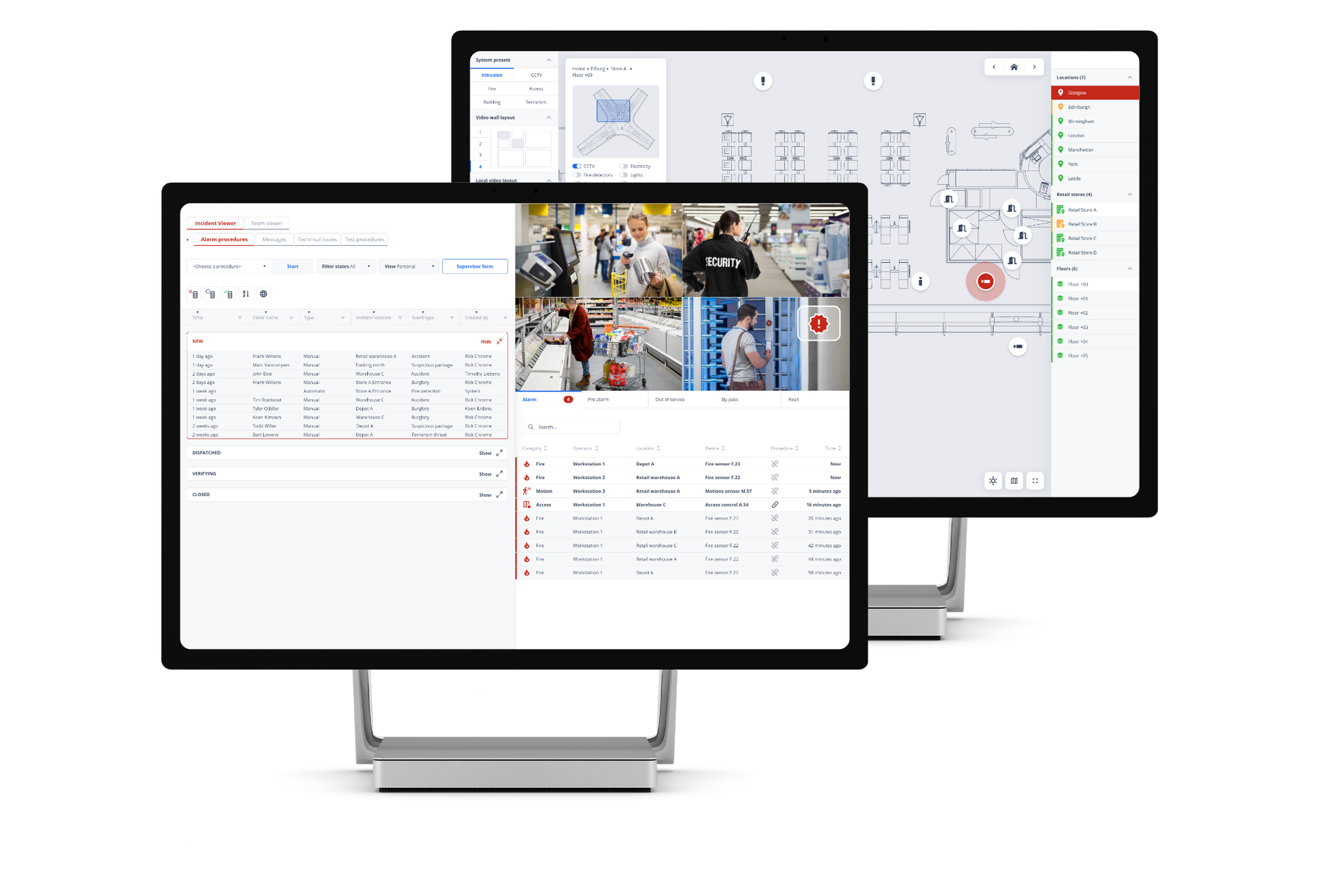
Want to see Sky-Walker in action?
Other blog posts