Download Product Ebook
 View all our solutions
 Sky-Walker Architecture
 View all our integrations
 Book Protocol workshop
 Our Company
 Contact Us
 View All Our Case Studies
 Become a PSIM Partner
 Become a Sky-Walker PSIM partner today!
 English
 Français
 Nederlands
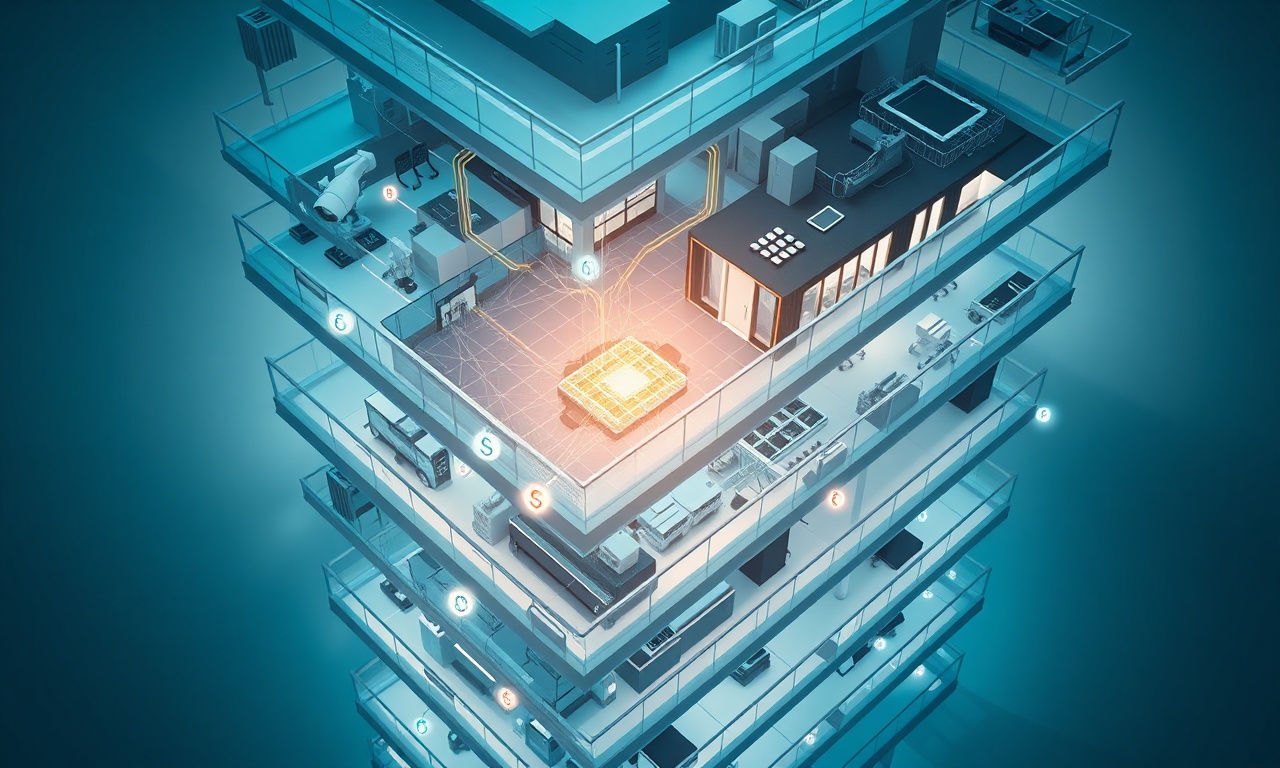
The Smart Building Revolution: Integrating Safety, Security, and Comfort for a Better Building

Why Disconnected Building Systems Are No Longer Sustainable
Walk into almost any commercial building today and you’ll find a familiar story behind the walls: systems that don’t talk to each other.
Fire detection operates independently from HVAC. Access control is managed on a separate platform from CCTV. Lighting and energy systems sit in their own silo, optimized in isolation rather than as part of a larger operational strategy. For decades, this fragmented approach was acceptable—functional, even.
Today, it’s a liability.
Buildings are no longer static assets. They are dynamic environments expected to deliver safety, security, efficiency, and occupant comfort simultaneously. And in a world of rising energy costs, stricter regulations, and higher tenant expectations, disconnected systems simply can’t keep up.
The smart building revolution isn’t about adding more technology. It’s about making existing technology work together.
The Three Pillars of Smart Buildings
At the heart of every building’s operation are three foundational pillars: safety, security, and comfort. Traditionally managed separately, these systems are now converging into a unified operational ecosystem.
Safety Systems: Protecting Life and Ensuring Compliance
Safety systems are the most critical layer in any building. Fire detection, evacuation protocols, and public address systems are designed with one primary goal: protecting human life.
Modern fire detection systems can identify risks earlier than ever before, but detection alone isn’t enough. The effectiveness of a response depends on how quickly and intelligently other systems react. Evacuation procedures, voice alarms, and emergency lighting must align instantly.
Without integration, these responses are delayed or manually coordinated—introducing risk at the worst possible moment.
Security Systems: Controlling Access and Monitoring Threats
Security systems have evolved significantly, moving beyond basic surveillance into proactive risk management.
Access control systems regulate who enters and exits a building. CCTV provides real-time monitoring and forensic evidence. Intrusion detection systems alert operators to unauthorized activity.
But when these systems operate in isolation, their effectiveness is limited. A door alarm might trigger, but without contextual awareness—such as video verification or occupancy data—operators are left piecing together the situation manually.
In high-risk environments, that delay matters.
Comfort Systems: Enhancing Occupant Experience and Efficiency
Comfort systems—HVAC, lighting, and energy management—are often viewed as secondary to safety and security. In reality, they are central to occupant satisfaction and operational cost control.
A well-optimized HVAC system improves air quality and productivity. Intelligent lighting enhances both energy efficiency and user experience. Energy management systems help reduce operational expenses and carbon footprint.
Yet, when these systems function independently, they miss opportunities to respond dynamically to real-world conditions—such as occupancy levels, external weather, or emergency scenarios.
Why Integration Is the Only Path Forward
The case for integration is no longer theoretical—it’s operational and financial.
From an operational standpoint, disconnected systems create inefficiencies. Facility teams are forced to monitor multiple interfaces, respond to fragmented alerts, and manually coordinate actions. This not only increases workload but also introduces the potential for human error.
From a financial perspective, siloed systems lead to higher costs. Redundant infrastructure, inefficient energy usage, and delayed responses to incidents all contribute to unnecessary expenditure.
Integration changes this equation entirely.
When systems communicate, buildings become responsive. Data flows across platforms, enabling automation and real-time decision-making. Instead of reacting to events, buildings can anticipate and adapt.
A Real-World Scenario: Coordinated Response in Action
Consider a fire event in a multi-story office building.
In a traditional setup, the fire detection system triggers an alarm. From there, facility managers must manually initiate evacuation procedures, notify security, and adjust building systems.
Now imagine the same scenario in an integrated environment.
The moment smoke is detected, the fire system communicates with a centralized platform. Instantly:
- The public address system broadcasts clear evacuation instructions tailored to specific zones.
- Access control systems unlock emergency exits while restricting access to affected areas.
- Elevators are recalled and disabled for safety.
- HVAC systems automatically shut down or adjust airflow to prevent smoke spread.
- CCTV cameras focus on affected zones, providing operators with real-time visibility.
- Security teams receive a unified alert with contextual data, enabling faster, more informed decisions.
This isn’t a sequence of disconnected actions—it’s a coordinated response.
The difference is measured in seconds, but the impact is measured in lives.
The Role of PSIM Platforms in Unifying Building Systems
At the center of this transformation is a new class of technology: Physical Security Information Management (PSIM) platforms.
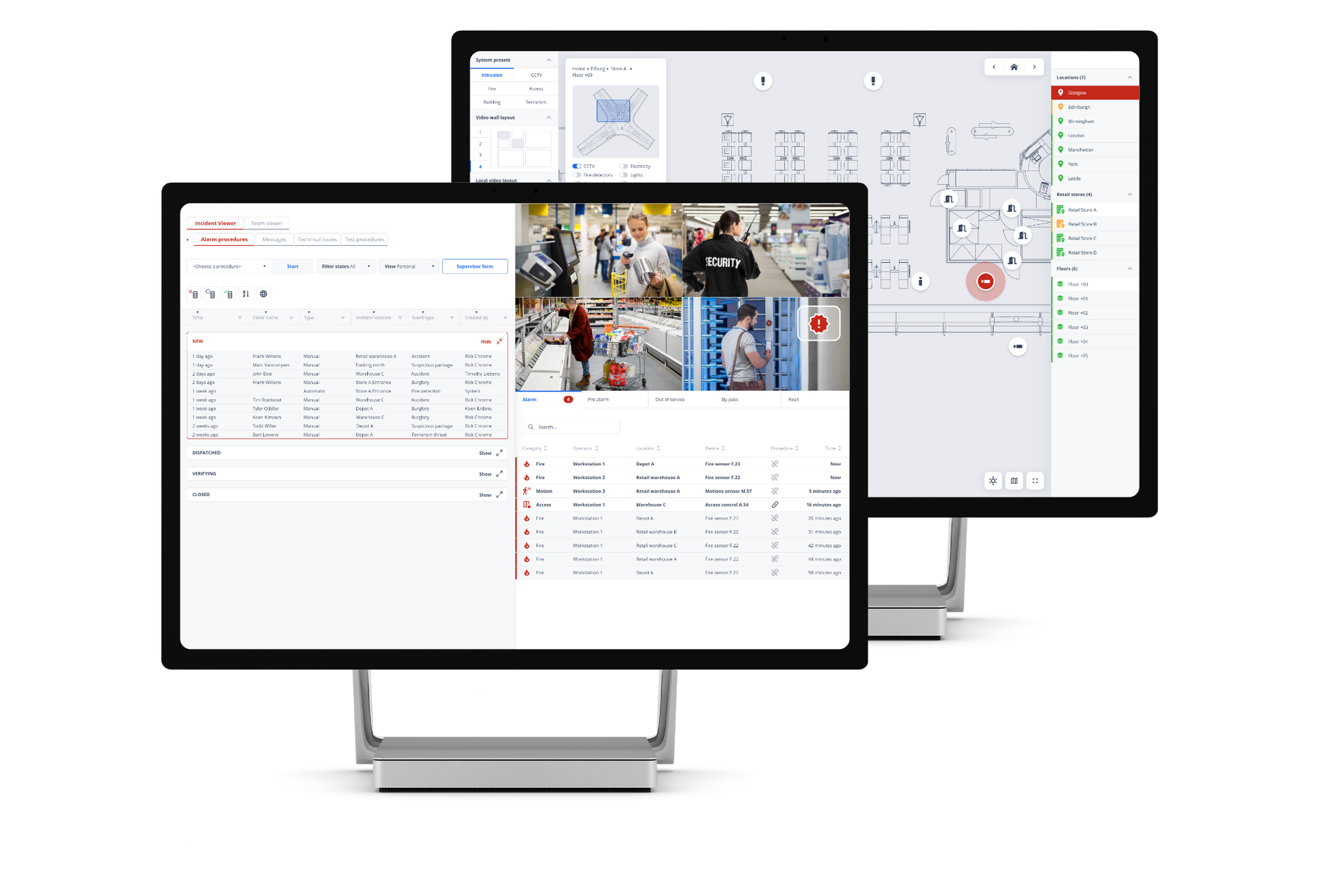
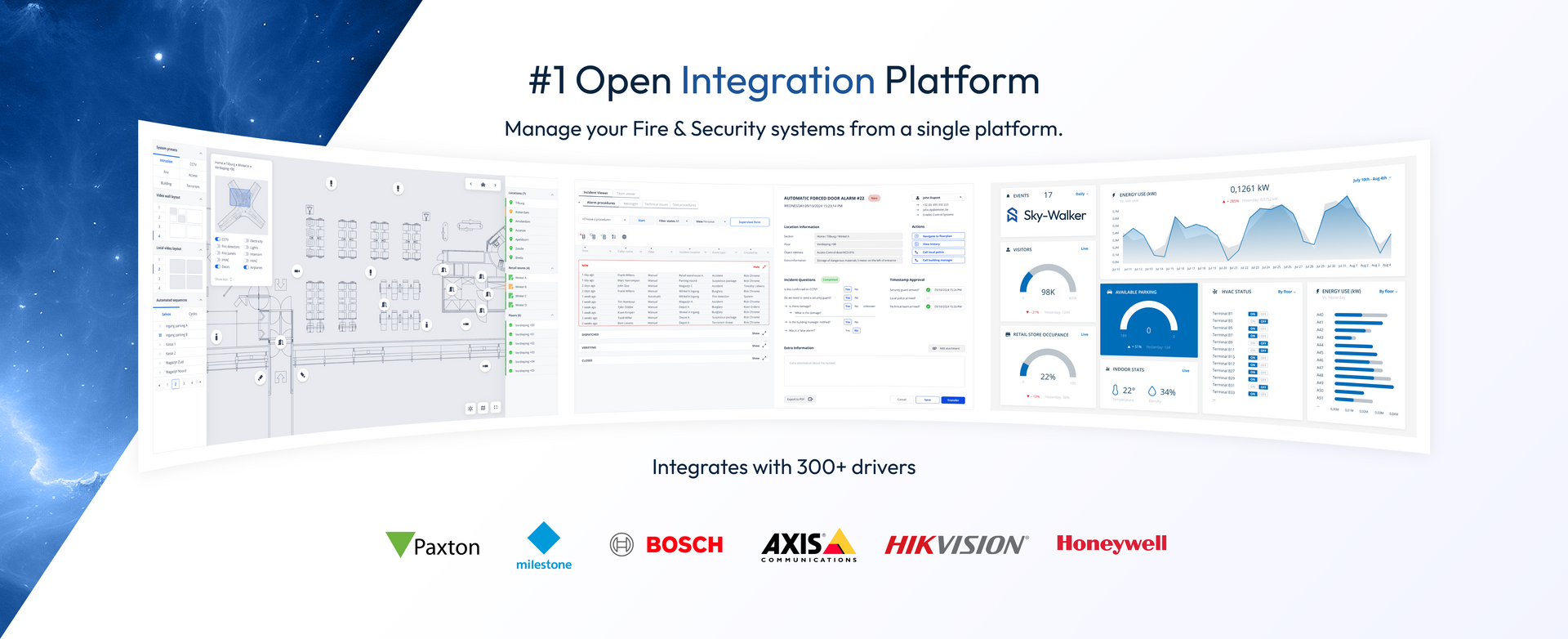
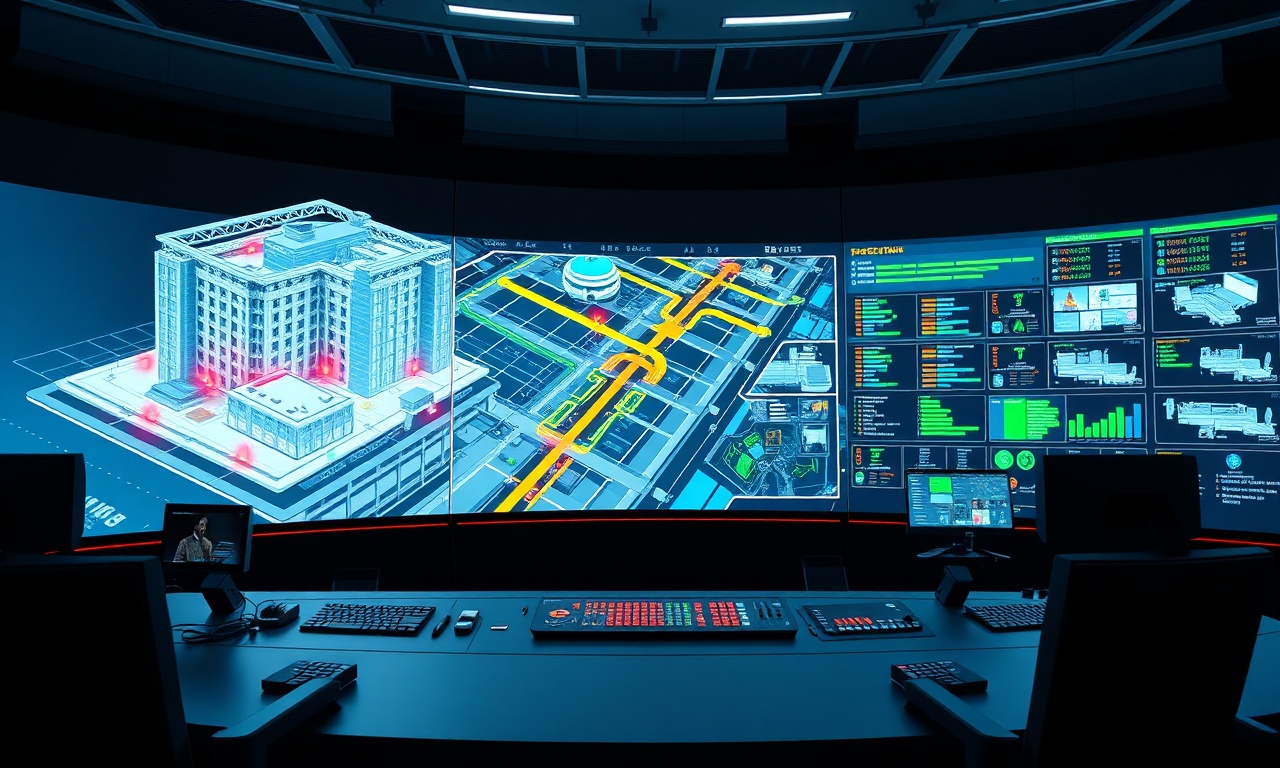
A PSIM platform acts as the brain of a smart building, integrating data from multiple systems into a single, unified interface. Instead of switching between dashboards, operators gain a holistic view of the building in real time.
More importantly, PSIM platforms don’t just aggregate information—they enable intelligent workflows.
When an event occurs, the platform can automatically trigger predefined responses across systems. It can guide operators through standard operating procedures, ensuring consistency and compliance. It can even prioritize alerts based on severity and context.
This level of orchestration is what turns a collection of systems into a cohesive, intelligent environment.
For facility managers and operations directors, the value is immediate: reduced complexity, faster response times, and greater control over building operations.
Conclusion
The conversation around smart buildings has shifted.
What was once seen as an innovation is now an expectation. Tenants demand safer, more comfortable environments. Regulators require higher standards of compliance and efficiency. And building owners are under pressure to reduce costs while increasing asset value.
Integration is no longer optional—it’s foundational.
Disconnected systems cannot deliver the responsiveness, efficiency, or insight that modern buildings require. The risks are too high, and the opportunities too significant to ignore.
For facility managers and decision-makers, the path forward is clear: evaluate your existing systems, identify integration gaps, and consider how a unified platform can transform operations.
The smart building revolution isn’t coming. It’s already here.
The question isn’t whether to integrate—it’s how quickly you can make it happen.
Want to see Sky-Walker in action?
Other blog posts

From Detection to Resolution: How Integrated Incident Management Platforms Elevate Security Response