Download Product Ebook
 View all our solutions
 Sky-Walker Architecture
 View all our integrations
 Book Protocol workshop
 Our Company
 Contact Us
 View All Our Case Studies
 Become a PSIM Partner
 Become a Sky-Walker PSIM partner today!
 English
 Français
 Nederlands
Sky-Walker Control Room in VR
Exploring the World of VR: Immersive Technology for Every Software Enthusiast
Virtual Reality (VR) is no longer just a futuristic concept from sci-fi movies. For those of us between 44 and 65 with a passion for software and technology, VR offers a fascinating blend of interactivity, education, and entertainment.
In this blog, we'll explore what VR is, its practical applications, some exciting trends, and even a peek into the Sky-Walker control room experience. Get ready to immerse yourself in the virtual world!
What is VR?
Virtual Reality (VR) is a technology that creates a fully immersive digital environment that you can interact with. Typically, you experience VR through a headset, sometimes combined with hand controllers. The magic lies in how it tricks your senses, making you feel as though you’re “inside” a computer-generated world. You can look around, move, and even interact with objects as if they were physically present.
For anyone with a background in software or digital systems, think of it as stepping inside a real-time, three-dimensional simulation that responds to your inputs. Every movement, every glance, every gesture is tracked and mirrored in the virtual space. Essentially, VR transforms passive observation into active participation.
Practical Applications of VR
VR isn't just about gaming or novelty it has powerful, real-world applications. Here are three areas where VR shines:
Travel Anywhere Instantly
One of the most thrilling uses of VR is virtual travel. Ever dreamed of climbing the Eiffel Tower, wandering through the Louvre, or even exploring the surface of Mars? VR makes it possible without leaving your living room.
By putting on a headset, you can dive into the Great Barrier Reef, stroll through ancient cities, or admire the wonders of the world from multiple perspectives. For software-savvy individuals, this is more than entertainment; it’s a way to explore spatial data and complex 3D models in ways traditional interfaces can’t replicate.
Imagine attending a virtual architectural walkthrough or inspecting a city’s infrastructure from above. VR allows for real-time analysis, giving users the ability to interact with structures, adjust parameters, and gain insights that might otherwise require expensive equipment or travel.
Learn by Doing
VR in hospitals is revolutionizing the way medical professionals learn and train. Instead of relying solely on textbooks or observation, doctors, nurses, and medical students can now practice procedures in a fully immersive virtual environment.
For example, surgeons can rehearse complex operations in VR, performing delicate procedures repeatedly without any risk to real patients. Nurses can simulate emergency scenarios, practicing quick decision-making and coordination under pressure. Even hospital staff can use VR to explore hospital layouts or practice handling new medical equipment safely before using it in real life.
This hands-on approach helps medical teams understand cause-and-effect in high-stakes situations and improve their skills in a controlled, safe setting. For software-minded healthcare professionals, VR acts as a dynamic sandbox: you can manipulate virtual instruments, adjust patient vitals, and simulate unexpected complications, all in real time. This not only boosts confidence but also improves patient safety and outcomes.
Fun and Fitness
VR games aren’t just for kids or teens. Many VR experiences are designed to get you moving, combining entertainment with fitness. From sword-fighting adventures to rhythm-based dance games, VR lets you exercise without feeling like you’re working out.
You can track your movements, improve coordination, and burn calories all while enjoying immersive environments that make physical activity fun and engaging. For software enthusiasts, this is also a playground to test motion tracking, gesture recognition, and physics engines in action.
VR Trends to Watch
The VR industry is evolving rapidly, and staying on top of trends is essential for enthusiasts and professionals alike. According to recent research, VR is expanding beyond entertainment into fields like remote work, simulation-based training, virtual conferences, and collaborative design.
Companies are exploring haptic feedback gloves, full-body tracking, and enhanced sensory immersion to make virtual environments feel even more realistic. For software professionals, this means opportunities to develop innovative applications, test virtual prototypes, and experiment with new interaction models.
VR is also being integrated with AI, allowing virtual worlds to react dynamically to user behaviour. Imagine an AI-controlled environment that adapts based on your actions, making simulations smarter and more challenging. This is a playground for anyone interested in algorithm design, user experience, or systems modelling.
Sky-Walker Control Room in VR
One of the most fascinating implementations of VR in professional settings is the Sky-Walker control room experience. In this scenario, users enter a virtual version of a control room where they can interact with the environment.
You can hit buttons, move objects like a coffee cup, adjust desk and screen heights, and explore the room as if it were real. After familiarizing yourself with the control room, the experience evolves into a gamified learning module.
You’re presented with scenarios on the screens, and your decisions influence how the situation unfolds. Answer correctly, and you gain points, reinforcing your understanding of the processes within the Sky-Walker system.
For software-savvy adults, this is a prime example of VR as a tool for interactive training and operational simulation. It combines problem-solving, procedural knowledge, and immersive visualization in a way that traditional manuals or videos can’t match.
Working with the Meta VR Headset
To bring VR into practice, we’re working with a Meta VR headset. This device makes immersive training and simulations accessible in a way that feels intuitive, even for users who are new to virtual environments.
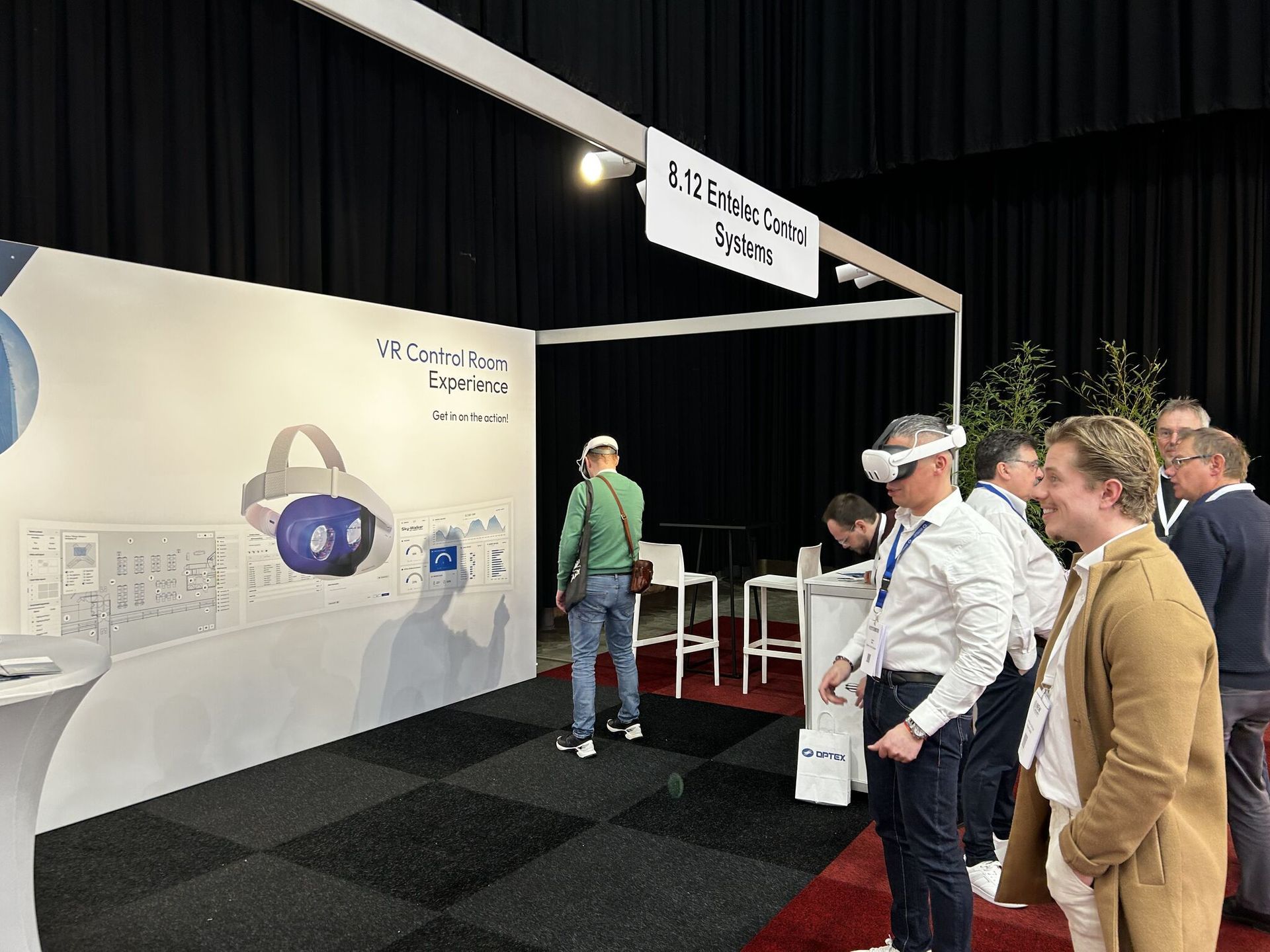
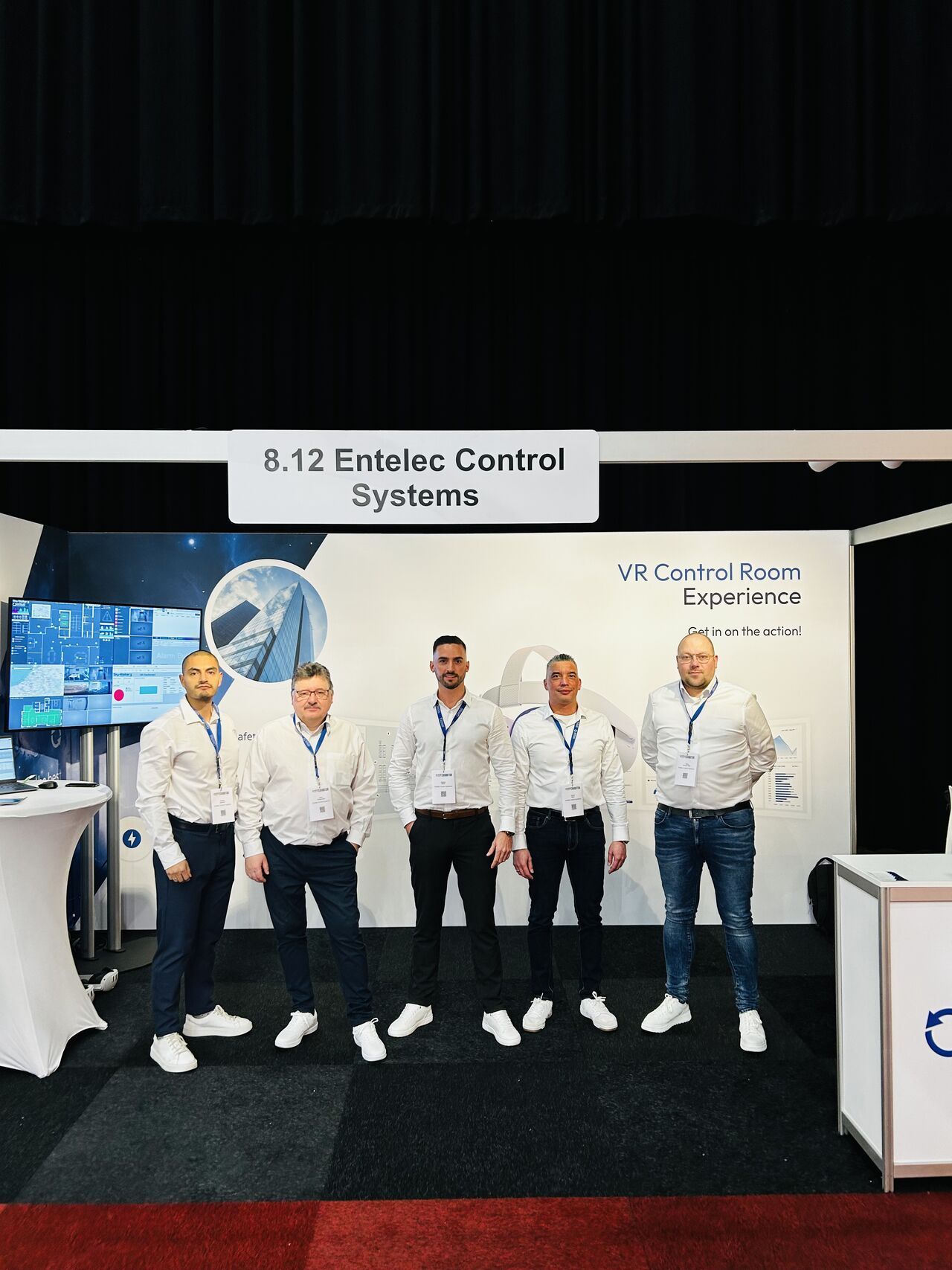
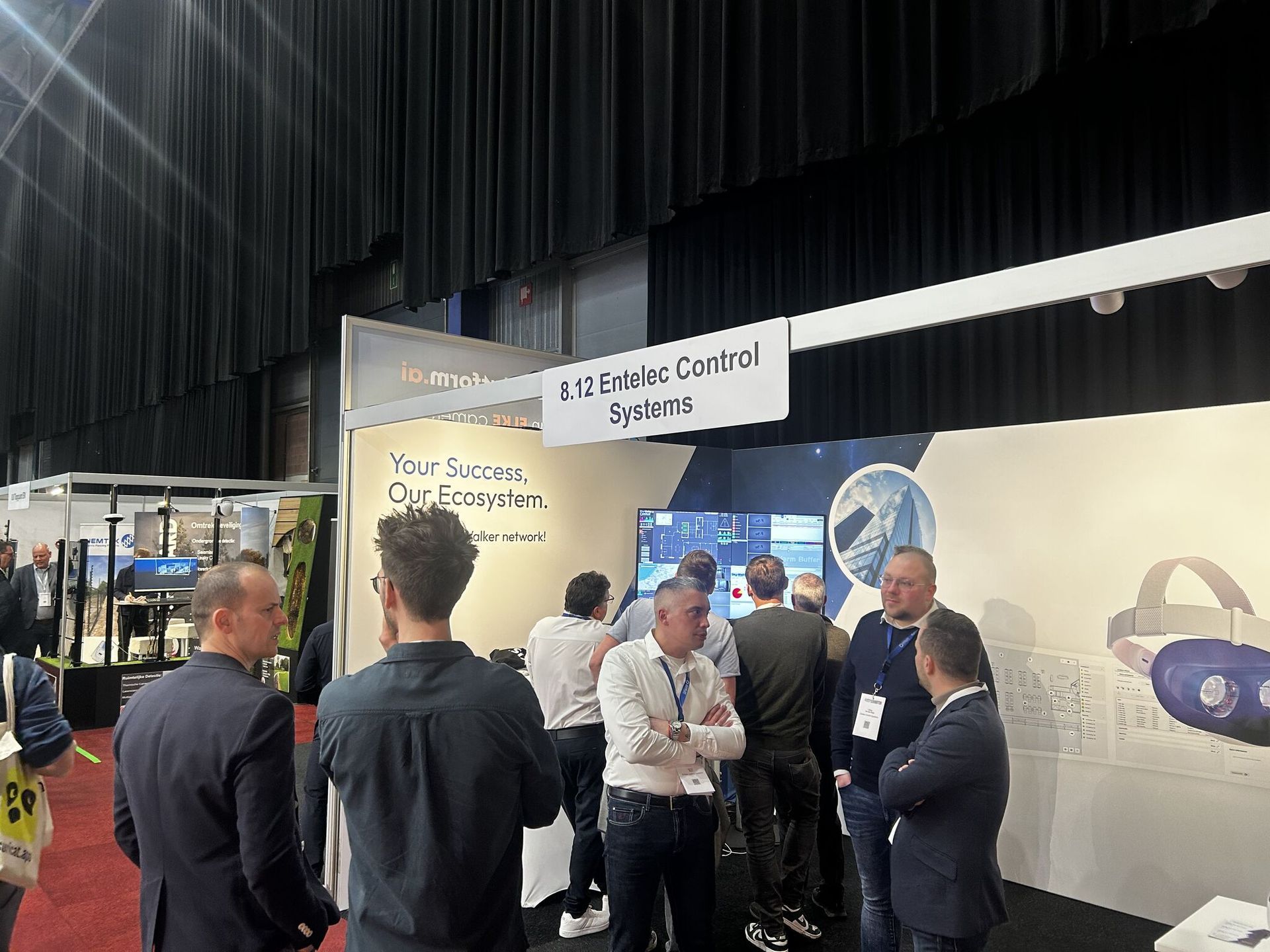
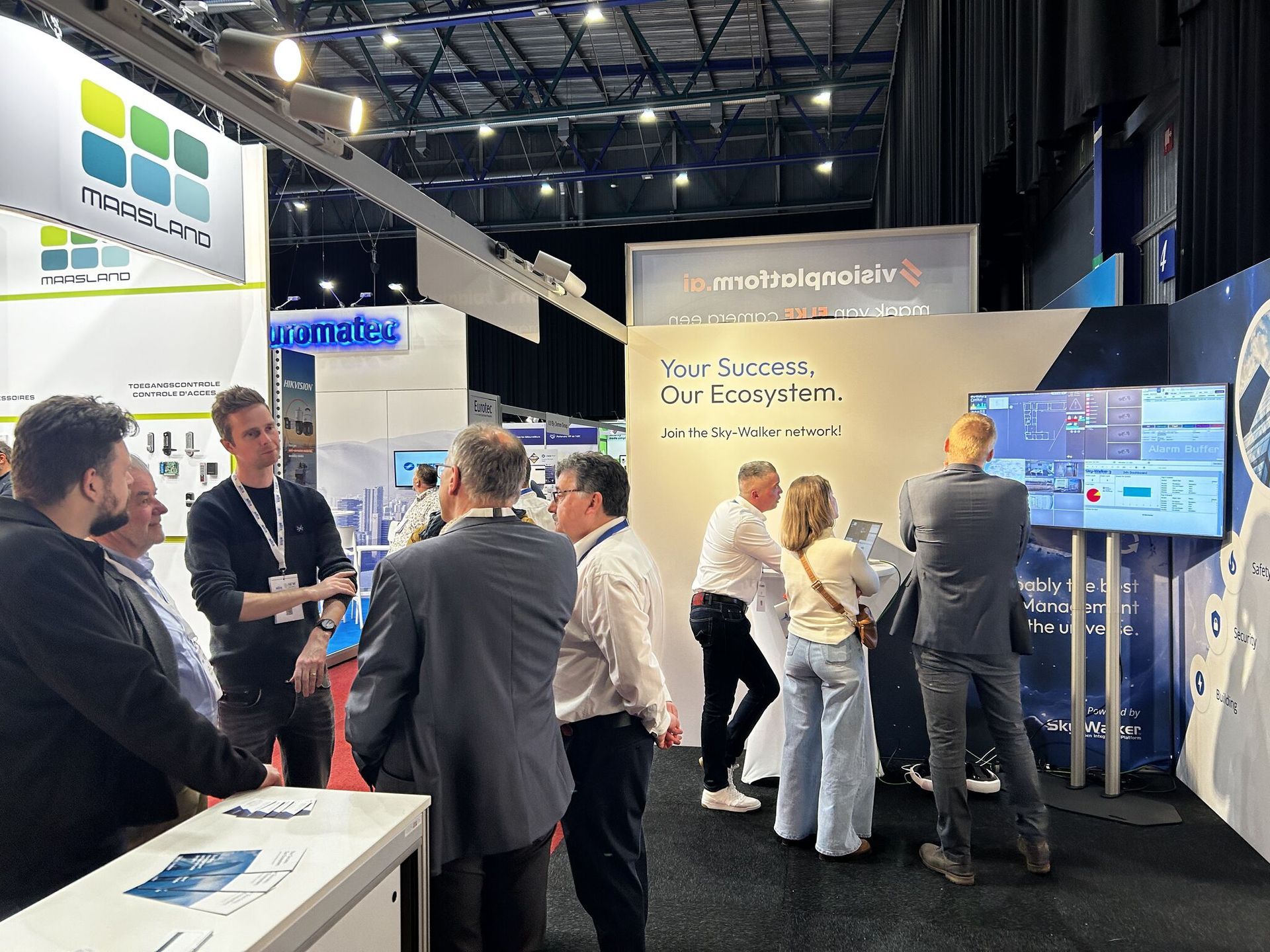
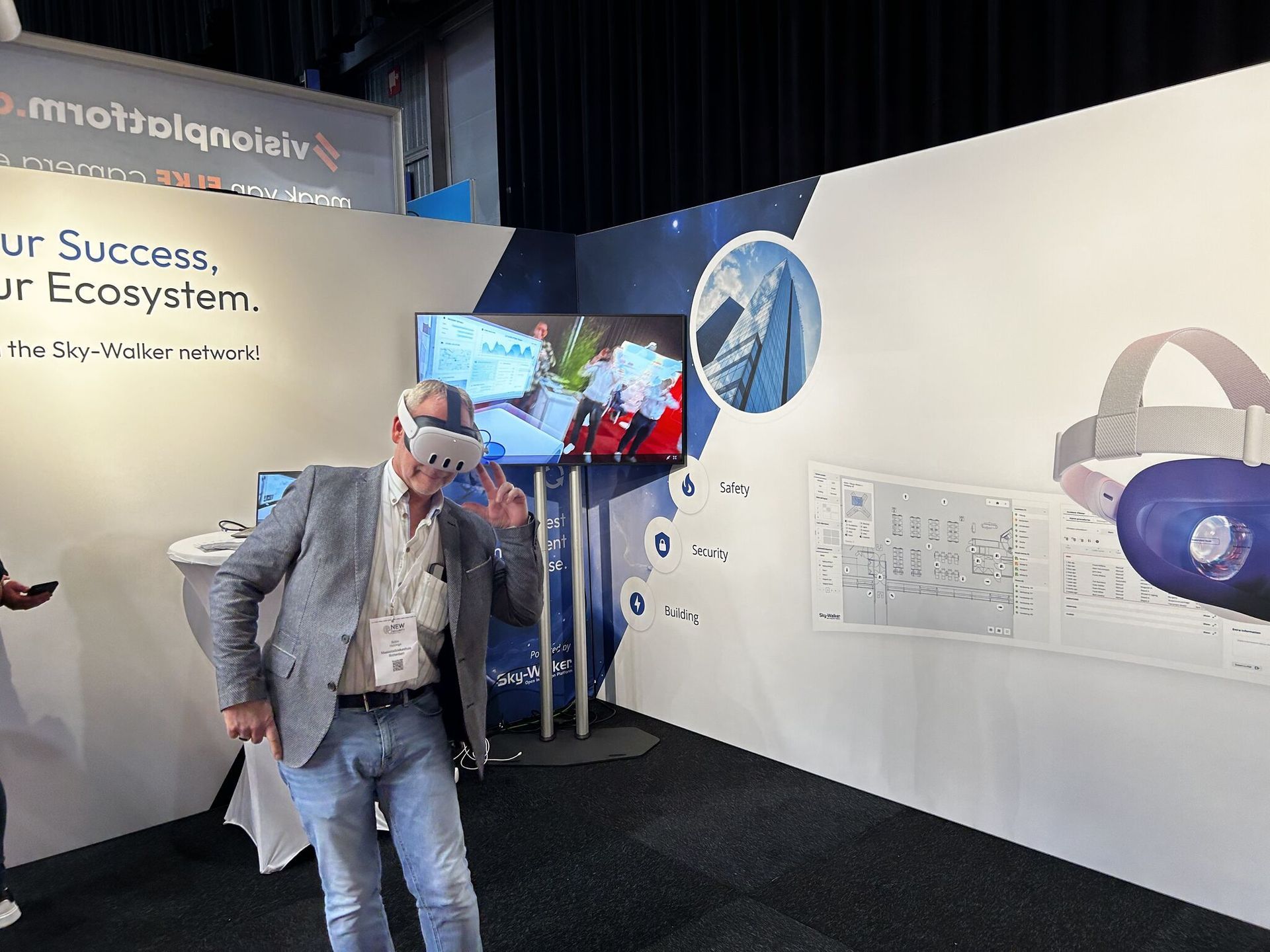
During the New Security event, people were even able to try the headset themselves. This gave visitors a hands-on experience of what it’s like to step into a virtual environment instead of just hearing about it.
The headset allows users to enter simulations like the Sky-Walker control room. Rather than watching a process on a screen, you’re placed directly inside the virtual space. You can look around naturally, interact with controls, and adjust elements in the room, such as desk height or screen positioning. Even small details, like moving a coffee cup, help create a sense of realism that makes the experience feel authentic rather than abstract.
In a hospital setting, this kind of accessibility is crucial. The Meta headset makes it possible for staff to train without needing complex setups or specialized technical environments. Medical professionals can practice scenarios, respond to simulated situations, and build confidence in decision-making — all without risk to patients.
By using the Meta headset alongside the Sky-Walker control room experience, VR becomes more than just a demonstration tool. It becomes a practical training platform that supports learning through interaction and repetition.
Why VR Matters for Tech Enthusiasts
For people with a deep understanding of software, VR is more than just a fun gadget. It’s an evolving platform that challenges our notions of interaction, simulation, and user experience. VR lets us see the world in 3D, manipulate objects in real time, and create digital spaces that respond naturally to human movement.
Whether you’re testing a prototype, exploring a virtual city, learning a new skill, or just having fun, VR merges technology and creativity in a way that resonates with anyone who loves software. It’s not only a tool for work or learning, but it’s a new frontier for designing experiences, experimenting with algorithms, and engaging with complex systems intuitively.
Conclusion
Virtual Reality is no longer science fiction; it’s a practical, entertaining, and educational tool that anyone interested in technology can appreciate. From exploring the far corners of the Earth (or beyond) to learning through interactive simulations and staying active in fun, immersive ways, VR offers endless possibilities.
VR represents a playground where software, design, and imagination meet. Whether it’s following the latest trends, testing new applications, or experiencing professional simulations like the Sky-Walker control room, VR is a medium that rewards curiosity, experimentation, and creativity.
So, strap on a headset, pick up a controller, and step into the world of VR. You might be surprised at how immersive and transformative it can be!
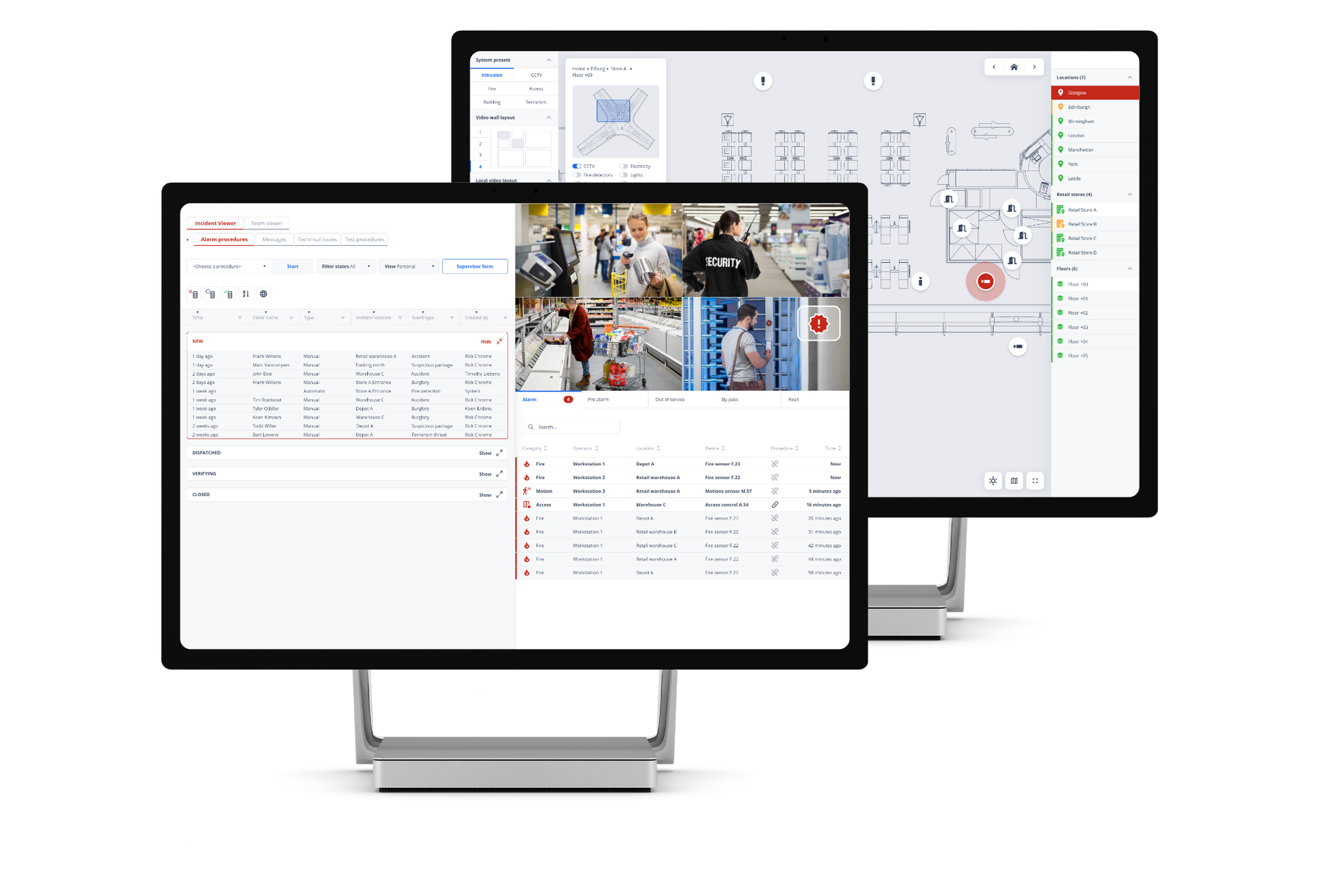
Want to see Sky-Walker in action?
Other blog posts