Download Product Ebook
 View all our solutions
 Sky-Walker Architecture
 View all our integrations
 Book Protocol workshop
 Our Company
 Contact Us
 View All Our Case Studies
 Become a PSIM Partner
 Become a Sky-Walker PSIM partner today!
 English
 Français
 Nederlands
Sky-Walker: Energy Efficiency Solutions as Middle East Conflict Drives Rising Costs
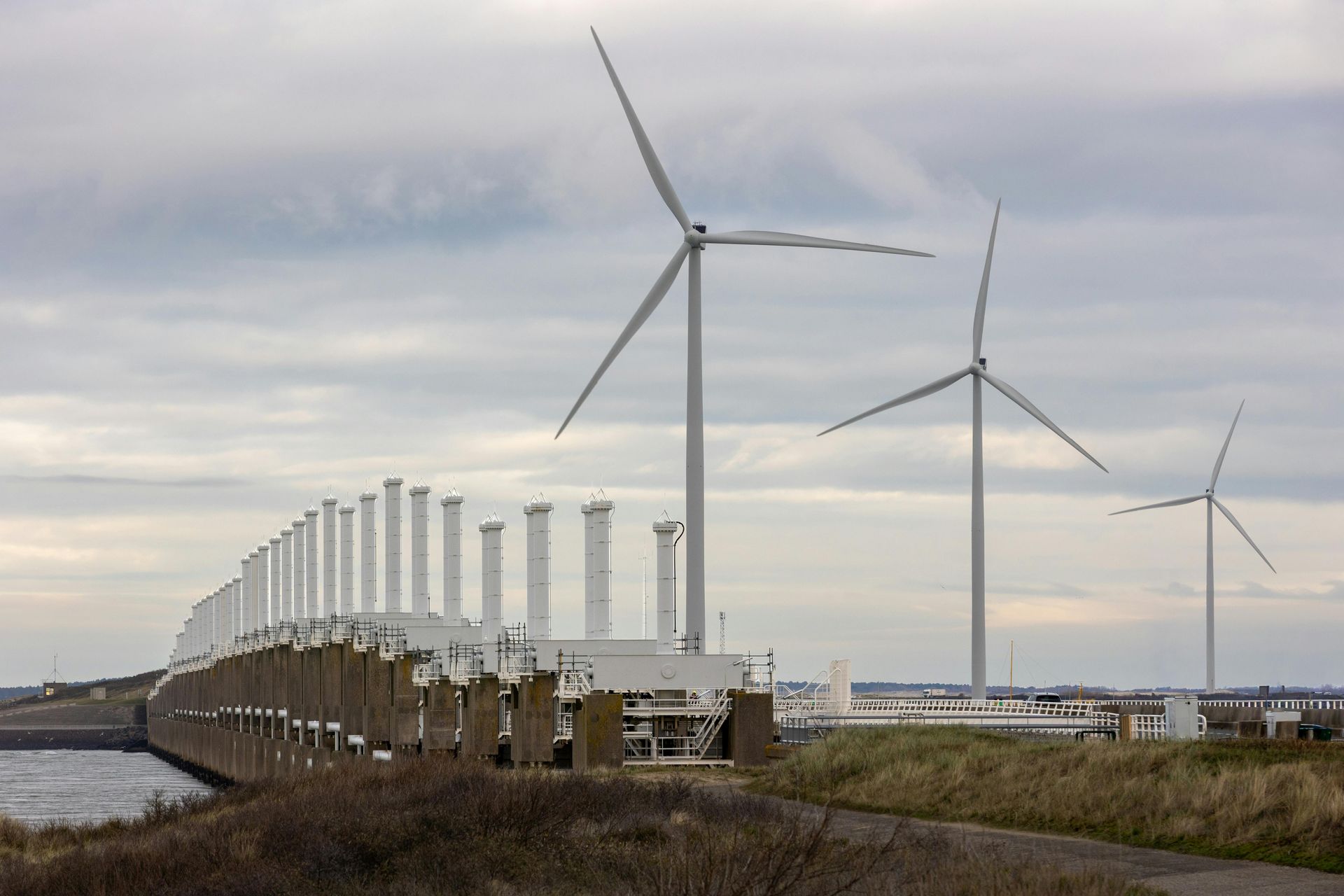
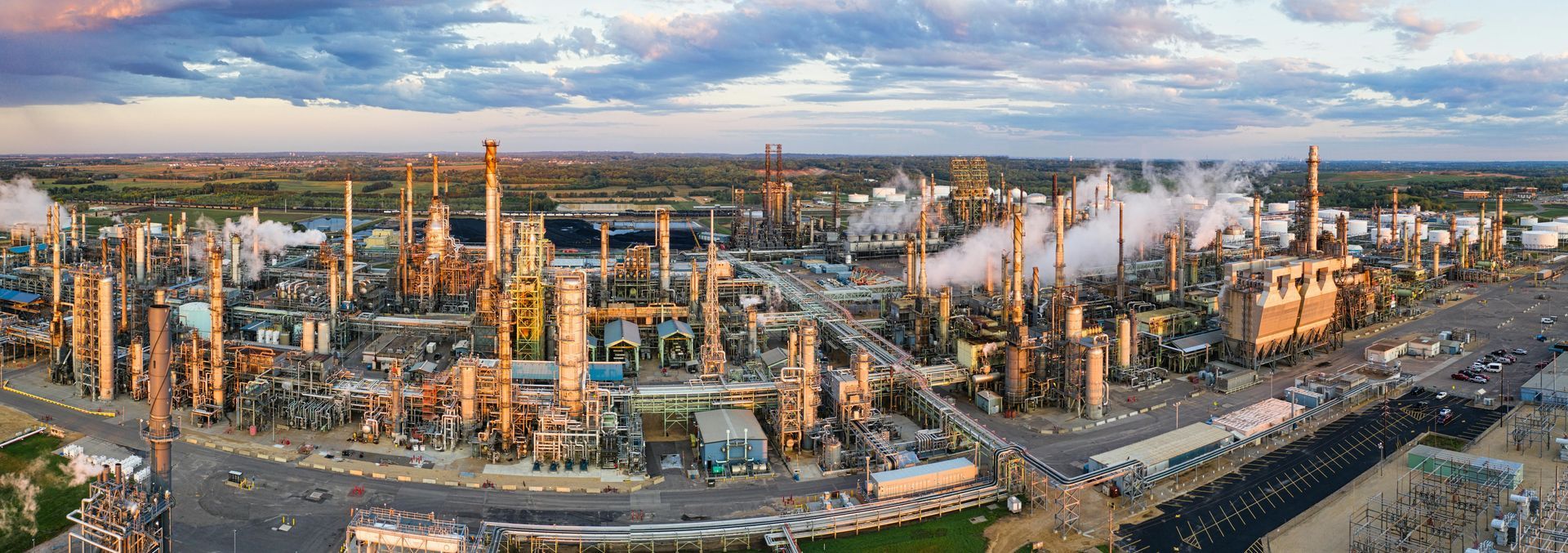
Energy Efficiency in Times of Crisis: How Integrated Building Management Can Stabilize Operations
The ongoing conflict in the Middle East has created unprecedented strain on global energy markets. As geopolitical tensions persist, energy prices continue their upward trajectory, sending shockwaves through international supply chains and operational budgets worldwide. Organizations across Europe, North America, and beyond are grappling with a harsh reality: energy costs that once represented a predictable operational expense have become a critical variable in business sustainability. For facility managers and operations directors overseeing large infrastructures, the pressure to maintain service levels while controlling energy expenditure has never been more acute.
The challenge extends beyond simple cost management. When energy becomes scarce and expensive, every inefficiency in building systems compounds financial losses. A poorly optimized HVAC system running at full capacity during off-peak hours, lighting controls that don't respond to occupancy patterns, or energy consumption data that arrives too late for corrective action; these seemingly minor operational gaps can translate into substantial losses when aggregated across months and years. Yet many organizations continue to manage their building systems in silos, lacking the real-time visibility and automated control mechanisms necessary to respond dynamically to energy pressures.
The Problem: Fragmented Systems and Blind Spots
Traditional building management operates under significant constraints. Security systems monitor access and surveillance, safety systems handle fire detection and emergency protocols, while building infrastructure, HVAC, lighting, and energy monitoring—functions independently.
This fragmentation creates operational blind spots. A facility manager tracking energy consumption through one interface, security incidents through another, and fire safety through a third loses the critical context needed to make informed decisions. When energy prices spike, the immediate reaction is often crude: reduce heating, increase thermostat settings, and dim lighting globally. These blunt instruments harm occupant comfort and productivity without actually addressing systemic inefficiencies.
Moreover, energy management systems alone provide consumption data but lack the integration with security and safety protocols needed for intelligent automation. If occupancy sensors aren't synchronized with access control data, lighting adjustments remain guesswork. If HVAC schedules don't account for fire suppression system requirements or building evacuation patterns, optimization becomes impossible without risking safety compliance.
The costs accumulate silently. A commercial building with fragmented systems might operate at 20-30% below optimal efficiency simply because the technical infrastructure lacks the centralized intelligence to coordinate across domains. In an era of rising energy prices, this inefficiency becomes a competitive liability.
The Solution: Unified PSIM Integration
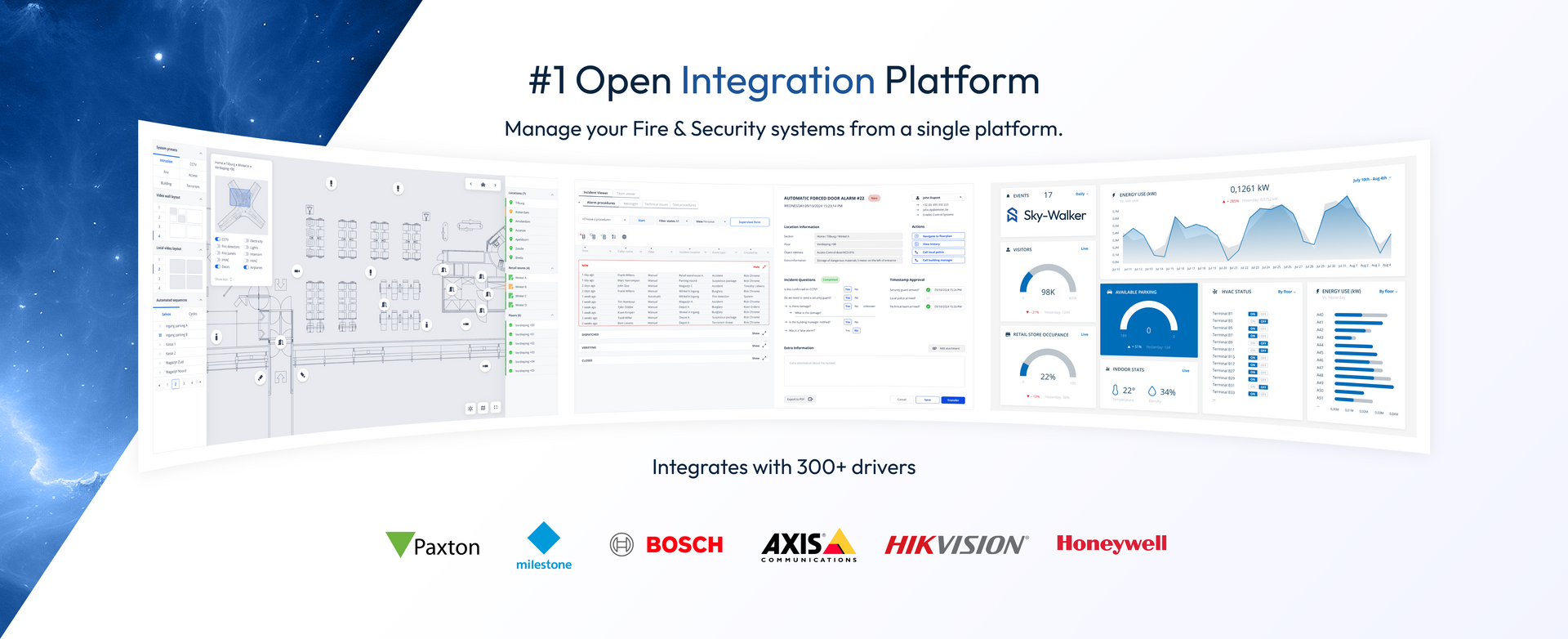
The solution lies in centralized integration, consolidating security, safety, and building systems into a single, intelligent platform capable of real-time monitoring and automated optimization. Sky-Walker's PSIM (Physical Security Information Management) architecture provides precisely this capability by connecting disparate systems into one unified control environment.
At its foundation, Sky-Walker integrates building systems comprehensively. The energy management module continuously measures consumption data across the facility, providing granular insight into usage patterns by zone, time period, and system type. More importantly, this energy data becomes contextually aware. The platform simultaneously integrates HVAC systems, allowing automated optimization based on actual occupancy patterns and environmental conditions. Lighting systems connect and respond not just to time-of-day scheduling, but to real-time occupancy data derived from access control systems. When a zone is unoccupied, confirmed through access control analytics, lighting automatically adjusts, and HVAC reduces output to minimum standby levels.
This integrated approach enables sophisticated automation routines. Consider a practical example: during peak energy pricing hours, the system can automatically shift HVAC operation to off-peak pre-cooling schedules, building thermal mass during low-cost periods, and reducing active cooling during peak-rate windows. Lighting automation extends beyond motion sensors to leverage building access patterns, understanding traffic flows, and adjusting illumination accordingly. These automated responses reduce manual intervention and eliminate the human delays that typically plague energy optimization efforts.
The building systems integration extends to HVAC management with unprecedented precision. Rather than operating on fixed schedules, HVAC systems adapt to actual building dynamics. The platform correlates occupancy data from access control systems with environmental sensors, fire protection requirements, and safety protocols. If fire detection triggers an evacuation sequence, HVAC systems automatically adjust to support public address announcements and evacuation logistics while minimizing energy waste during the crisis. Once the emergency concludes, systems revert to optimized efficiency modes without manual reconfiguration.
Security and Safety: Critical Enablers of Efficiency
Building performance and security are not separate concerns; they're fundamentally interdependent. Sky-Walker's security integration becomes essential for energy optimization. Access control systems provide the occupancy intelligence that drives lighting and HVAC efficiency. By knowing which zones are occupied and when, the platform executes targeted automation without sacrificing security monitoring. Intrusion and burglary detection systems remain fully active while energy efficiency algorithms operate in parallel.
Expanding Capabilities: Drone Integration for Critical Infrastructure Protection
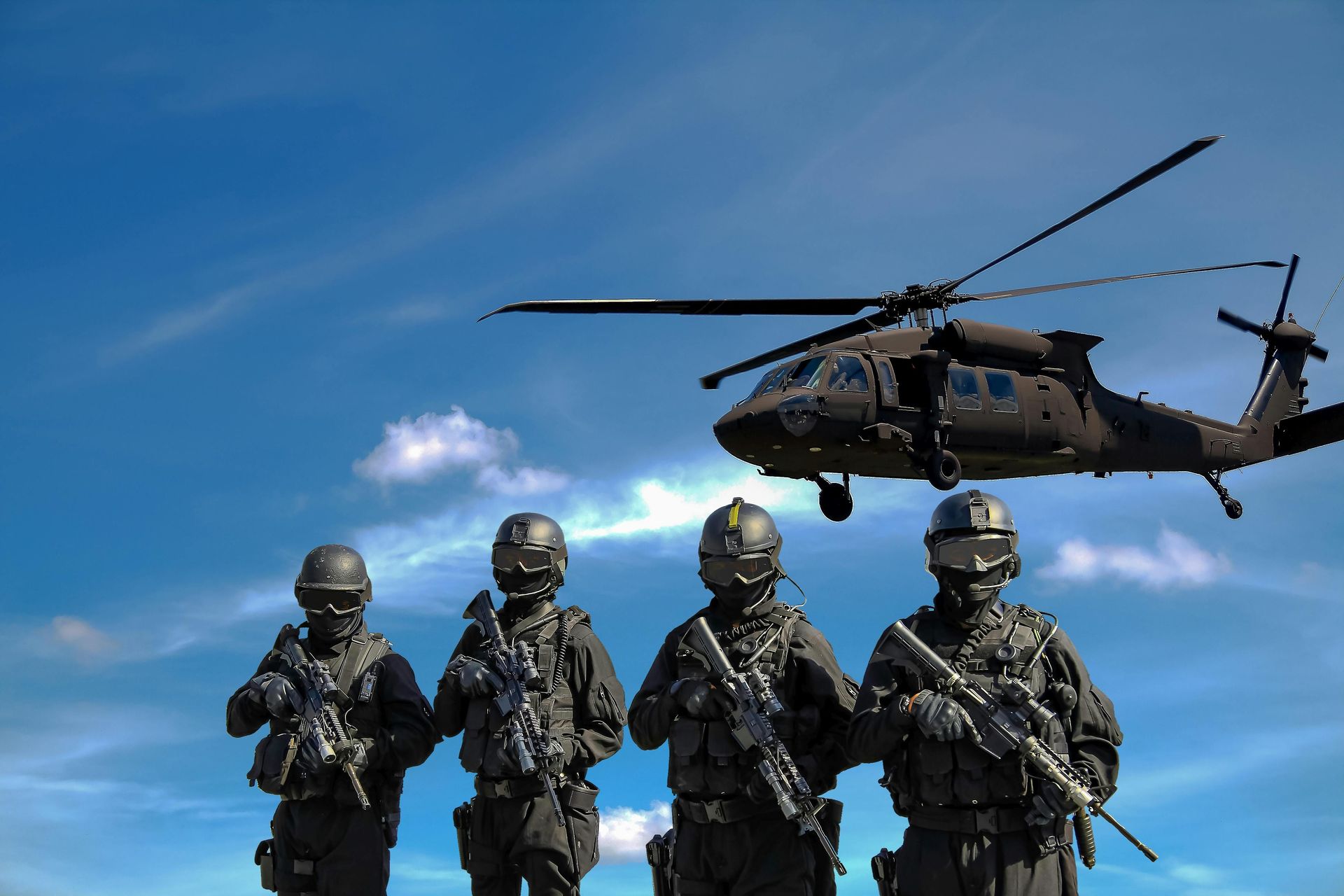
For military and defense applications, Sky-Walker's architecture extends beyond traditional building management to encompass advanced surveillance and reconnaissance systems. The platform's open integration framework can incorporate unmanned aerial vehicle (UAV) data streams and drone-based reconnaissance systems, enabling comprehensive situational awareness across vast operational areas. Military installations benefit from the seamless integration of drone telemetry flight paths, thermal imaging data, and perimeter surveillance feeds into the same PSIM environment managing building security, energy, and safety systems.
In conflict zones or high-threat environments, this integration provides critical operational advantages. Drones conducting perimeter surveillance feed real-time visual and thermal data directly into Sky-Walker's control room interface. The platform correlates this external surveillance data with access control logs, intrusion detection alerts, and CCTV feeds from facility-based systems, creating a unified operational picture. When threats are detected at a distance through drone surveillance, the system automatically triggers coordinated responses: access control restrictions escalate, internal security systems activate, and building isolation protocols engage all without manual operator intervention. For military installations and defense facilities in regions affected by the Middle East conflict, this integration represents a substantial enhancement to force protection and operational security, ensuring that external threats detected by aerial reconnaissance immediately cascade into coordinated internal defensive measures.
The drone integration also supports energy efficiency in military contexts. Thermal imaging from aerial reconnaissance identifies infrastructure vulnerability and heat signature patterns, providing data that informs HVAC optimization and facility hardening strategies. Military planners can use this intelligence to adjust facility operations, reducing visible thermal signatures during high-threat periods while maintaining operational capability, a critical consideration in contested environments.
Safety systems similarly enable intelligent optimization. Fire detection and fire protection systems integrate with HVAC control to ensure that energy-saving measures never compromise emergency response capability. When fire detection systems activate, they trigger coordinated responses across HVAC, public address, and access control systems. The platform manages these critical functions while maintaining energy efficiency during normal operations. Evacuation procedures, fire suppression protocols, and safety messaging through public address systems all execute seamlessly alongside energy management routines.
This integration eliminates the traditional trade-off between efficiency and safety. Organizations no longer choose between optimized energy consumption and comprehensive safety protocols they achieve both through intelligent coordination.
Quantifiable Impact and Operational Resilience
Organizations implementing integrated PSIM solutions typically achieve energy consumption reductions compared to fragmented building management approaches. For large commercial facilities, this translates to hundreds of thousands of euros in annual savings. Beyond cost reduction, the consolidated platform provides operational resilience. During energy price volatility, operators can rapidly adjust optimization parameters, understand the impact across all interconnected systems, and execute complex changes without the coordination delays that plague siloed environments.
The platform's centralized intelligence also reduces staffing burden. Rather than requiring dedicated operators to monitor separate energy, security, and safety systems, a single control room manages all functions through an intuitive interface. Configuration remains modular and adaptive; the system accommodates new building systems and protocols without major reconfiguration. Over 30 years of development, Sky-Walker's architecture has proven capable of scaling from single facilities to multi-site enterprises, maintaining performance and reducing long-term maintenance costs through its modular, standardized design.
Moving Forward
As Middle East tensions sustain upward pressure on energy costs and supply chain uncertainty remains the operational reality, organizations must transcend incremental efficiency gains. The transition to integrated PSIM-based building management represents not merely a cost control measure but a fundamental shift in operational sophistication. By consolidating security, safety, and building systems into a single intelligent platform, facilities achieve the visibility and automated responsiveness necessary to thrive amid energy uncertainty.
The technology exists. The question is whether operations teams will continue managing fragmented systems or embrace the integrated intelligence that modern PSIM platforms provide. In times of crisis, the organization that sees the complete operational picture, correlating occupancy, energy, security, and safety data into coherent action maintains a competitive advantage and operational stability that others struggle to achieve.
Conclusion
The energy crisis precipitated by Middle East geopolitical tensions is not a temporary disruption; it signals a structural shift in how organizations must operate. Rising energy costs will persist, making operational efficiency not a nice-to-have optimization but a core business requirement. However, efficiency cannot be achieved through isolated measures. A lighting system optimized in isolation provides marginal gains. An HVAC system fine-tuned without understanding occupancy patterns wastes resources during critical hours. Security and safety systems operating independently drain energy while failing to inform building optimization.
Sky-Walker's integrated PSIM architecture addresses this reality by connecting previously disconnected operational domains. Energy management gains context from security data. Building systems respond intelligently to safety requirements. Drone-based surveillance feeds directly into facility defense protocols. The result is not simply a more efficient building, it's an operationally intelligent facility capable of responding dynamically to both routine and crisis conditions while minimizing energy expenditure.
For facility managers, military planners, and operations directors facing the convergence of energy crisis and security challenges, the choice is clear. Fragmented systems belong to the past. The organizations that will maintain operational resilience and financial stability in the coming years are those that embrace centralized, intelligent integration. Sky-Walker provides the architecture to achieve this transition, transforming building operations from a cost center to a strategic advantage in uncertain times.

Want to see Sky-Walker in action?
Other blog posts