


 Download Product Ebook
 View all our solutions
 Sky-Walker Architecture
 View all our integrations
 Book Protocol workshop
 Our Company
 Contact Us
 View All Our Case Studies
 Become a PSIM Partner
 Become a Sky-Walker PSIM partner today!
 English
 Français
 Nederlands
Smart Intelligent Building Management Platform for Connected Facilities
Transform your facility into an intelligent, responsive environment. Sky-Walker's smart building platform unifies security, safety, and comfort systems, enabling centralized management, automated controls, and data-driven optimization. Reduce energy costs, enhance occupant safety, and improve operational efficiency.
What Defines a Smart Building?
A smart building is an intelligently connected facility where security, safety, and comfort systems operate as an integrated whole. Rather than functioning independently, these systems communicate, share data, and coordinate actions to optimize building operations, enhance occupant safety, and reduce operational costs.
The smart building management system can be composed of three types of systems :
- Safety systems (Fire detection, fire protection, sprinkler...)
- Security systems (CCTV, access control, intrusion detection...)
- Comfort systems (HVAC, Lighting...)
The intelligent building is much more useful than a traditional building because it will allow you to achieve precise objectives, particularly in terms of energy cost reduction but also comfort for your inhabitants

Smart building Bahrain World Trade Centers
From Traditional to Smart: The Transformation Process
Smart building transformation is elegantly simple: connect everything to a unified platform. Once integrated, all systems can be monitored, controlled, and optimized from a single interface with automated responses handling routine situations.
The Integration Approach
- Centralized Platform: All systems connect to Sky-Walker, the intelligent integration backbone.
- System Communication: Each system shares data and status with the central platform.
- Unified Control: Operators manage all systems from one interface and dashboard.
- Autonomous Operation: Many systems operate autonomously based on programmed logic.
- Operator Intervention: Critical decisions still involve human operators when needed.
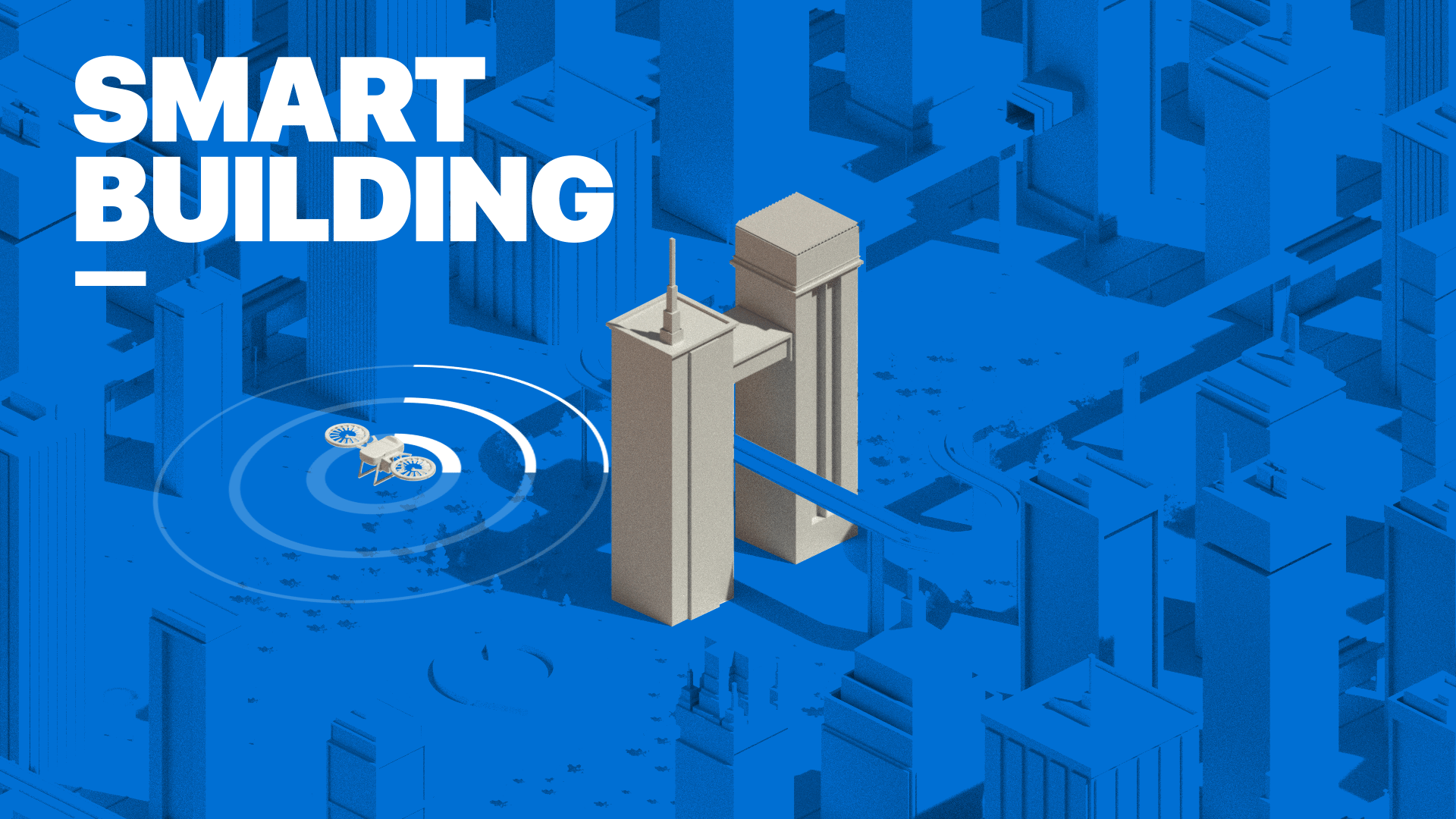
Sky-Walker smart building vision
Smart Building System Categories
Sky-Walker integrates three primary system categories into a unified smart building platform:
Safety systems
Protect occupants and assets through rapid threat detection and coordinated
response.
- Fire Detection: Smoke detectors, heat sensors, and flame detection systems.
- Fire Protection: Automatic sprinkler systems, suppression controls, and emergency shut-off valves.
- Emergency Response: Automated escalation, alarms, and emergency procedures.
- Public Address: Facility-wide emergency announcements and occupant notifications.
- Emergency Dispatch: Coordinated response procedures and resource allocation.
- Perimeter Detection: Perimeter intrusion detection for critical areas.
Security systems
Maintain physical security through surveillance, access control, and threat detection.
- CCTV & Video Surveillance: Facility-wide video monitoring with optional analytics.
- Access Control: Manage entry through badges, biometric readers, and smart locks.
- Intercom Systems: Two-way communication between security teams and building occupants.
- Intrusion & Burglary Detection: Sensors detect unauthorized access attempts.
- Automatic Gates & Barriers: Control vehicle and pedestrian traffic to restricted areas.
- Alarm Management: Centralized handling of security alarms and escalation.
Comfort systems
Optimize environmental conditions, operational efficiency, and occupant experience.
- HVAC Systems: Monitor and control heating, ventilation, air conditioning across multiple zones.
- Intelligent Lighting: Occupancy-based lighting control, daylight harvesting, and scene management.
- Energy Management: Monitor power consumption, optimize usage, and identify savings opportunities.
- Escalators & Elevators: Monitor operational status, occupancy, and maintenance needs.
- Energy Consumption Tracking: Dashboard visibility into facility energy usage patterns.
- Environmental Monitoring: Temperature, humidity, air quality, and indoor environmental conditions.
The importance of smart buildings for
your safety, security and comfort
Measurable Benefits of Smart Building Implementation
Smart building platforms deliver significant improvements across operational, financial, and occupant experience dimensions:
Energy efficiency
Reduction in energy consumption through intelligent HVAC control, occupancy-based lighting, and real-time monitoring.
Comfort for the users
Reduction in facility operating expenses through automation, optimization, and reduced manual intervention.
Safety and security
Integrated fire, security, and emergency systems respond coordinated, rapid responses to threats or emergencies.
Faster Technical Problem Resolution
Automated alerts identify issues immediately. Predictive analytics prevent failures before they occur.
Improved Occupant Comfort:
Occupancy sensors optimize lighting and temperature in real-time, creating personalized comfort environments.
Better Decision-Making
Comprehensive operational data enables data-driven facility management decisions.
Reduced Maintenance Costs
Predictive maintenance alerts prevent equipment failures, reducing expensive emergency repairs.
Regulatory Compliance
Comprehensive logging and audit trails support compliance with building codes and regulations.
Enhanced Property Value
Smart building capabilities increase facility value and appeal to tenants and buyers.
Building Management System (BMS) Software
Sky-Walker's integrated BMS software is the control center for your smart building. It enables comprehensive monitoring and control of all building systems, automated optimization, and data-driven decision making.
Core BMS Capabilities
- Unified Monitoring Dashboard: Single interface displays status of all building systems in real-time.
- Automated Control: Pre-configured logic automates routine operations (lighting, HVAC adjustments).
- Energy Optimization: Continuously monitor and optimize energy usage across the facility.
- Occupancy-Based Control: Systems respond automatically to occupancy patterns (lights off when empty, comfort settings when occupied).
- Preventive Maintenance: Alerts flag maintenance needs before equipment failure occurs.
- Reporting & Analytics: Generate reports on energy usage, operational efficiency, and system performance.
- Mobile Access: Monitor and control building systems remotely via mobile devices.
- Integration with Security: Coordinate security and safety systems with building operations (e.g., fire alarm triggers emergency lighting).
Operational Advantages of Smart Building Integration
Smart building platforms transform facility management and operations:
- Reduced Manual Intervention: Automated systems handle routine tasks (lighting, temperature adjustments, alerts). Operators focus on strategic issues.
- Faster Response Times: Automated alerts and workflows enable rapid response to issues, emergencies, or anomalies.
- Simplified Operator Training: Learn one interface instead of multiple system-specific applications. Faster staff ramp-up.
- Improved Operational Consistency: Standardized automated workflows ensure consistent responses and procedures.
- Better Resource Allocation: Data reveals where resources are needed, enabling more efficient staffing and maintenance scheduling.
- Cross-System Coordination: Security systems trigger operational responses; safety systems coordinate with all building functions.
- Occupant Comfort Optimization: Sensors detect occupancy patterns and environmental preferences, automatically adjusting comfort settings.
- Compliance Documentation: Automated logging provides documentation for regulatory compliance, audits, and incident investigation.
Sky-Walker is a smart choice for your smart building
Principally with smart building solutions, Sky-Walker uses a BMS (Building Management System) software. The smart building management with this software allows the operator to monitor and control all technical and security installations present in the designated building.
The ultimate goal of a Building Management System software is to reduce the yearly operational cost of the building. This aim can be reached by monitoring and controlling the energy consumption, tracking and solving technical problems much faster and providing more comfort and safety to all occupants of the building.
Thanks to the smart building management solutions like the BMS software and others, the management of smart buildings drastically facilitated. Moreover, this environment allows to be connected with other smart buildings in order to create a sharing network.
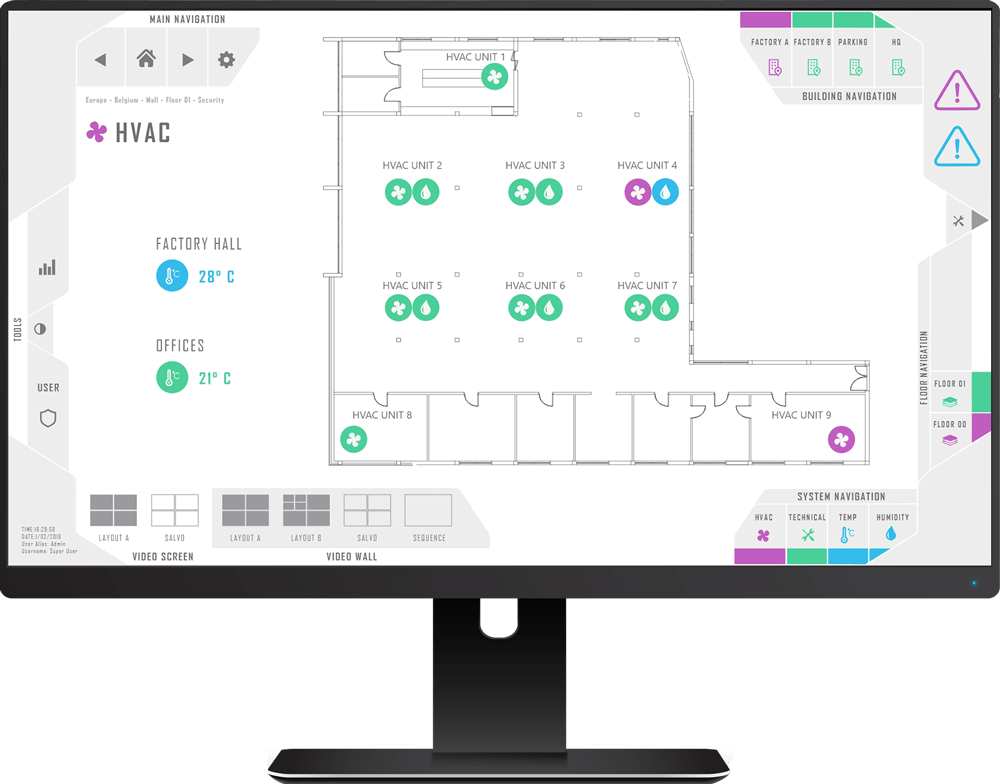
Sky-Walker bms software
Operational Advantages of Smart Building Integration
Smart building platforms transform facility management and operations:
Reduced Manual Intervention
Automated systems handle routine tasks (lighting, temperature adjustments, alerts). Operators focus on strategic issues.
Faster Response Times
Automated alerts and workflows enable rapid response to issues, emergencies, or anomalies.
Simplified Operator Training
Learn one interface instead of multiple system-specific applications. Faster staff ramp-up.
Improved Operational Consistency
Standardized automated workflows ensure consistent responses and procedures.
Better Resource Allocation
Data reveals where resources are needed, enabling more efficient staffing and maintenance scheduling.
Cross-System Coordination
Security systems trigger operational responses; safety systems coordinate with all building functions.
Occupant Comfort Optimization
Sensors detect occupancy patterns and environmental preferences, automatically adjusting comfort settings.
Compliance Documentation
Automated logging provides documentation for regulatory compliance, audits, and incident investigation.
Smart Building Solutions for All Facility Types



Related Resources
Smart building technology isn't the future; it's available today. Reduce operational costs, enhance safety, and improve occupant experience. Start your smart building transformation with Sky-Walker.
- Explore Smart City Integration Platform for city-wide facility management
- Discover Building Management Software for detailed HVAC, lighting, and energy control
- Learn about System Integration Software and how to connect diverse systems
- Review Professional Services for implementation support and training
- Explore our Security System Integrations (Access Control, CCTV, Intrusion Detection)
- Learn about Safety System Integrations (Fire Detection, Emergency Response)
Frequently Asked Questions
What makes a building "smart"?
A smart building integrates security, safety, and comfort systems into a unified platform. These systems communicate, share data, and coordinate actions to optimize operations, enhance safety, and improve occupant experience.
Do I need to replace all my building systems?
No. Sky-Walker integrates with existing systems. You keep your current equipment and add intelligent integration capabilities on top.
How long does implementation take?
Timeline depends on facility size and complexity. Small facilities: 2-4 weeks. Medium: 1-3 months. Large/complex: 3-6 months. Implementation typically occurs in phases with minimal operational disruption.
Can I add more systems later?
Yes. Sky-Walker's modular architecture enables adding systems anytime. Integration is phased—you don't need to integrate everything simultaneously.
Will smart building systems work if network goes down?
Individual systems operate autonomously. Critical safety systems function independently. Sky-Walker's functionality is reduced without network connectivity, but essential operations continue.
What kind of training do facility staff need?
Entelec provides comprehensive training. Most operators master Sky-Walker quickly because it's intuitive and replaces multiple system-specific interfaces with one unified platform.
Think bigger with the smart city
Sky-Walker's technology allows you to receive all information in real time from your city's information technology. All the data is sent to Sky-Walker and you will be able to transform your city into a real smart city.