Download Product Ebook
 View all our solutions
 Sky-Walker Architecture
 View all our integrations
 Book Protocol workshop
 Our Company
 Contact Us
 View All Our Case Studies
 Become a PSIM Partner
 Become a Sky-Walker PSIM partner today!
 English
 Français
 Nederlands
Smart decisions in retail through Sky-Walker
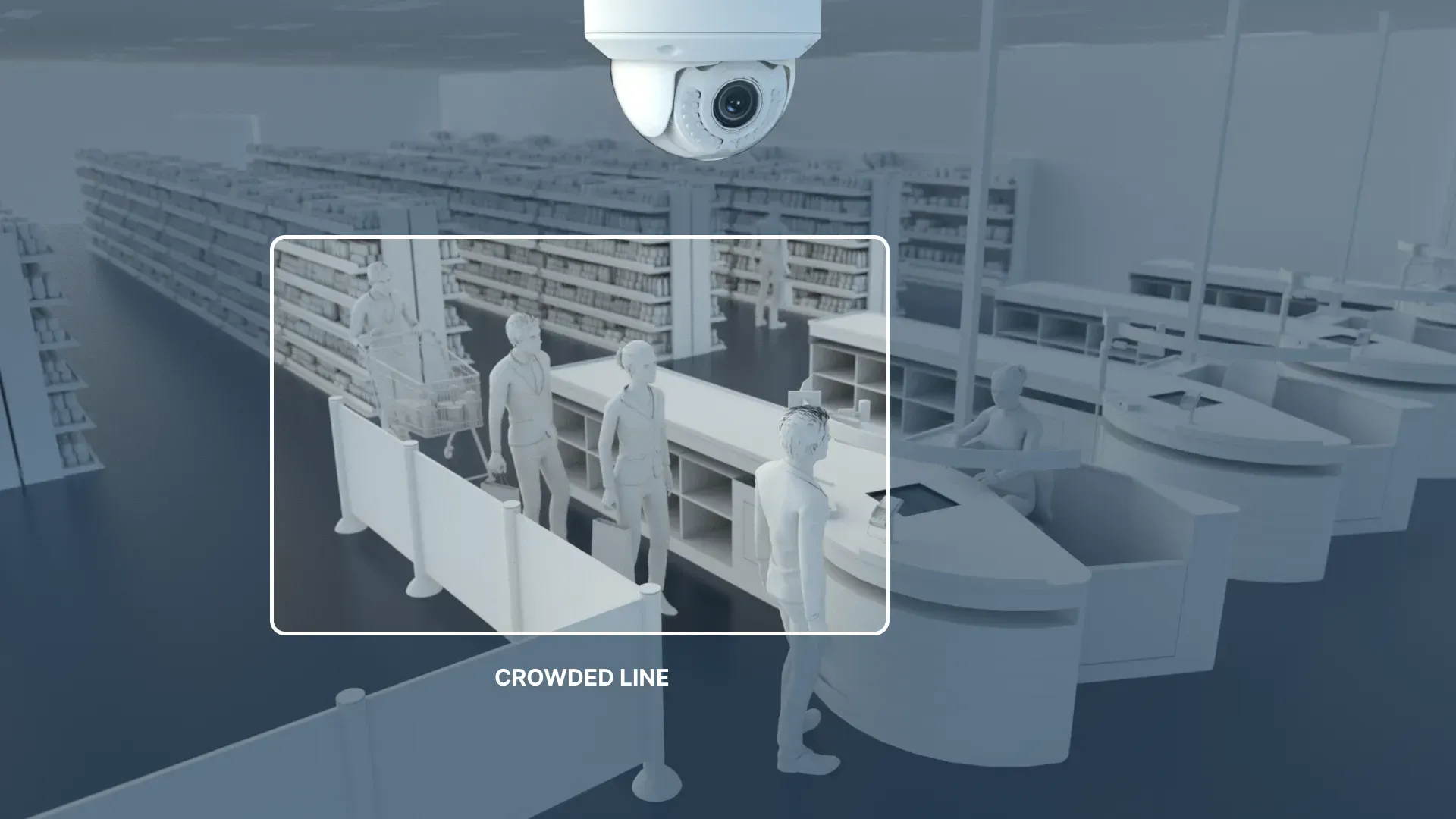
Retail loss
Retail across Europe is under growing pressure. Rising operational costs, staffing challenges, and increasingly sophisticated theft methods are forcing retailers to rethink how they protect their stores, employees, and customers. While shoplifting has always been part of retail risk, its scale today has reached a point where traditional prevention methods alone are no longer sufficient.
Recent European data highlights the seriousness of the situation. As one industry report states:
“The rising cost of shrinkage and shoplifting in Europe. Shrinkage affects retailers in every market, but recent data from multiple European countries paints a sobering picture of its scale. In the United Kingdom and Wales, shoplifting offences reached over 530,000 in the year ending March 2025, a 20 per cent rise and the highest level in two decades, with customer theft losses hitting a record £2.2 billion (€2.6 billion). Retailers spent £1.8 billion (€2.1 billion) on prevention measures in that period, highlighting the heavy investment required to combat losses. In Germany, annual inventory discrepancies pushed by shrinkage reached nearly €5 billion in 2024, according to the EHI Retail Institute, with shoplifting alone costing the sector nearly €3 billion. In France, approximately 70,000 thefts are logged annually, accumulating roughly €7.2 billion in losses.”
Reference: https://www.nrfbigshoweurope.com/en/industry-trends/Shop-floor
These figures make one thing clear: retail loss is no longer a marginal issue. It is a structural challenge that directly impacts profitability, safety, and customer experience.
The hidden problem behind retail loss
While theft is often discussed as an isolated incident: a stolen item, a broken tag, a security alert, the real challenge lies in what happens after the incident.
Many retailers struggle not because incidents occur, but because they lack:
- A clear overview of what is happening across stores
- Consistent incident reporting processes
- Real-time situational awareness
- Data-driven insight into patterns and trends
Incidents are frequently logged in separate systems, emails, spreadsheets, or not recorded at all. This fragmentation creates blind spots. When data is scattered, patterns remain invisible, and without patterns, prevention becomes reactive instead of proactive.
This is where incident management becomes critical.
From reaction to control: The role of Incident Management
Modern retail environments generate enormous volumes of events every day: alarms, camera alerts, access control notifications, staff reports, and customer incidents. Without structure, this information becomes noise.
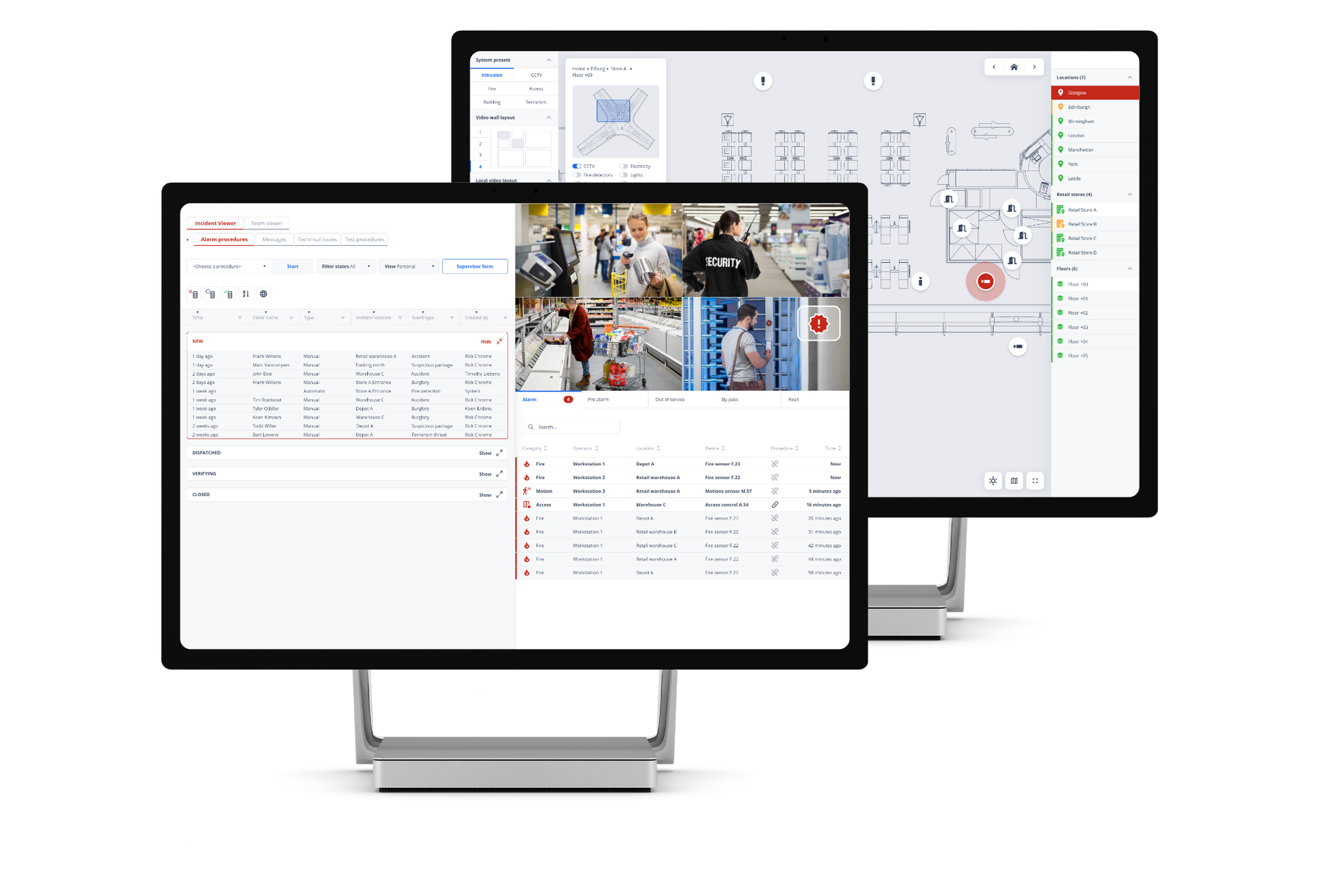
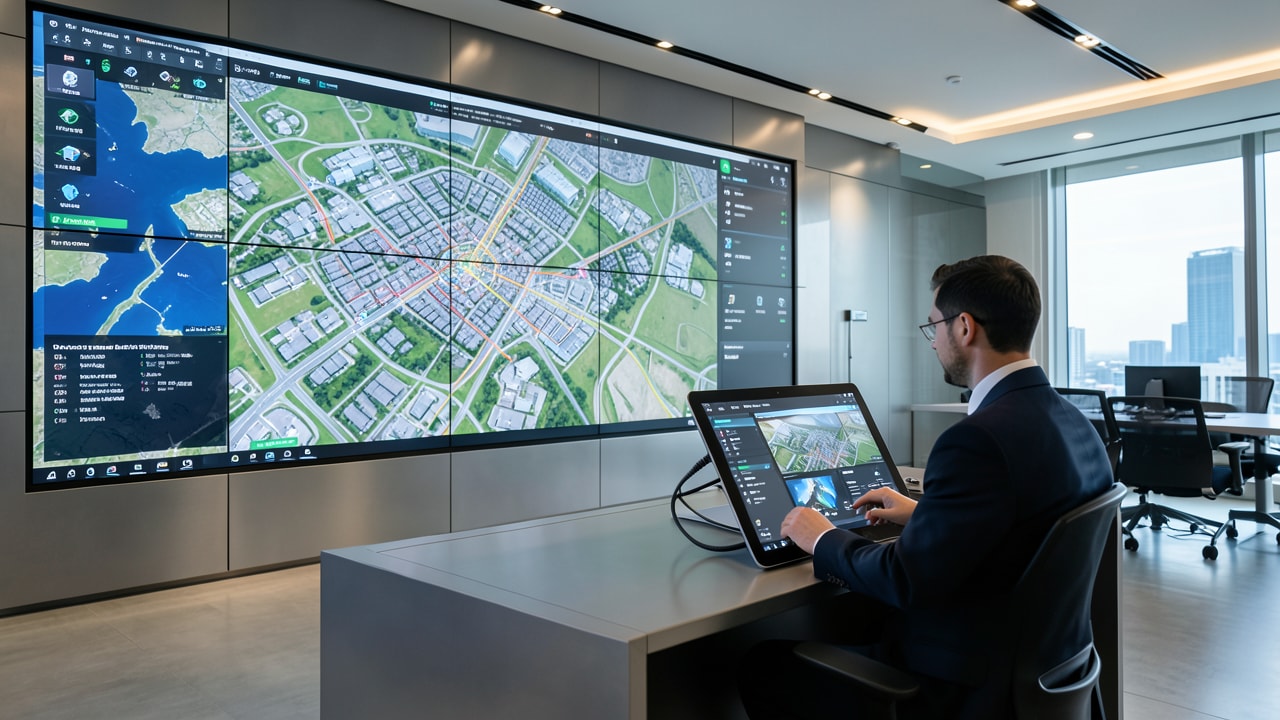
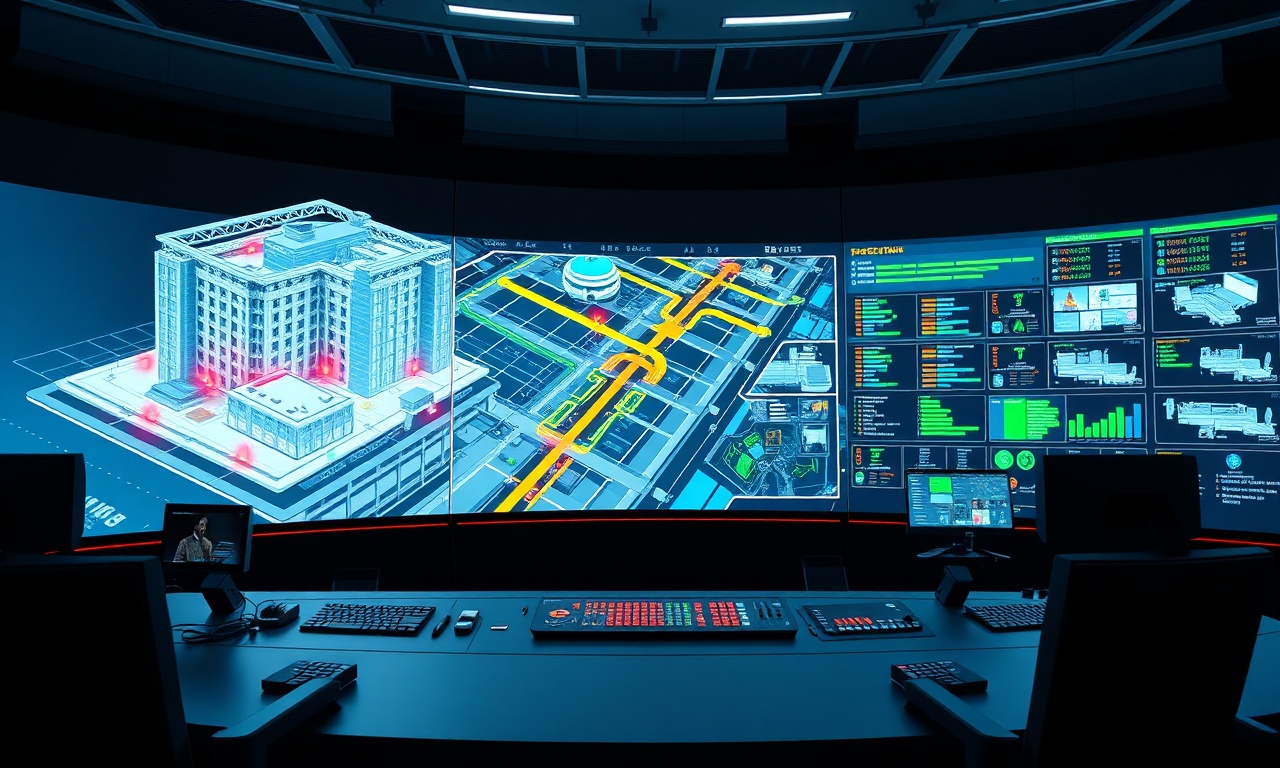
An effective incident management platform like Sky-Walker brings order to that complexity by centralising events into a single operational view. Instead of responding to incidents in isolation, retailers gain the ability to:
- Detect incidents faster
- Standardise response procedures
- Ensure correct escalation
- Document actions taken
- Analyse trends over time
When incidents are handled consistently, decision-making improves. Management teams no longer rely on assumptions or anecdotal feedback; they rely on data.
This shift from reaction to control is essential in an environment where losses are rising and margins are under pressure.
Connecting technology through Smart Building Integration
Retail is no longer just about shelves and checkout counters. Modern stores are complex ecosystems of interconnected systems, including:
- CCTV and video analytics
- Access control
- Intrusion detection
- Fire safety systems
- Building management systems
- IoT sensors
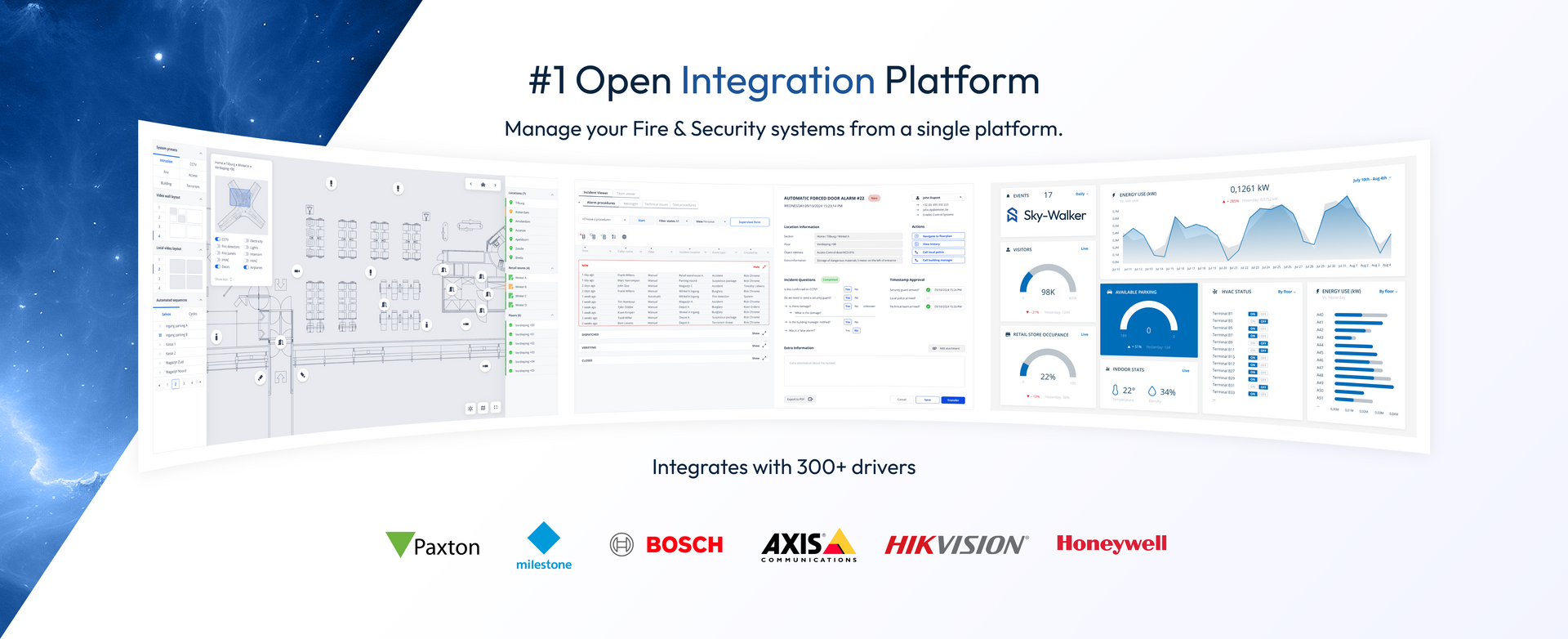
A smart building integration platform enables these systems to communicate with one another instead of operating in isolation. This integration is critical for situational awareness.
For example:
- A theft alarm can automatically link to nearby camera footage
- Access events can be correlated with incident timelines
- Environmental data can support investigations
- Store managers can receive structured alerts instead of fragmented notifications
By connecting physical security, building systems, and operational data, retailers gain a unified understanding of what is happening in real time, across one store or hundreds.
PSIM Software: Turning data into action
Physical Security Information Management (PSIM) software plays a central role in modern retail operations. Rather than replacing existing systems, PSIM connects them.
This integration allows retailers to:
- Visualise incidents on maps or dashboards
- Follow predefined response workflows
- Reduce human error during stressful situations
- Improve coordination between store staff and security teams
- Maintain full audit trails for compliance and analysis
When an incident occurs, speed and clarity matter. PSIM ensures that the right information reaches the right people at the right time, supported by clear procedures.
Why AI matters in retail security
The scale of incidents facing European retailers makes manual monitoring increasingly unrealistic. This is where AI becomes a powerful partner.
AI-driven analytics can:
- Detect unusual behaviour patterns
- Identify recurring theft methods
- Highlight high-risk time periods or locations
- Reduce false alarms
- Support staff with decision-making
Instead of reviewing hours of footage or thousands of alerts, teams can focus on validated, high-priority events.
AI does not replace people; it supports them. By reducing noise and increasing accuracy, retailers can deploy their resources more effectively and respond with confidence. Sky-Walker is not an AI software itself, but it brings together AI-powered solutions from partners like Vaibs Video Analytics and Solid Systems, integrating cameras and analytics into a single dashboard for complete oversight.
Retail case
Imagine a retailer operating dozens or even hundreds of stores across Europe. Without an integrated platform, each store may handle incidents differently, data can be incomplete or delayed, and management lacks visibility across locations. Prevention strategies often rely on assumptions rather than insight.
By using integrated incident management, smart building connectivity, PSIM software, and AI-powered analytics from trusted partners, retailers can standardise incident workflows, capture data automatically, and identify trends across regions, allowing decisions to be made based on facts, not guesswork.
The benefits are clear: reduced losses, faster response times, improved staff safety, and stronger operational control. Retail security transforms from a reactive cost centre into a strategic function.
For a real-world example of how this works in practice, read the full case study on our website to see how Entelec helps retailers gain complete oversight and control.

Moving toward preventive retail operations
The European retail landscape is changing rapidly. With billions lost annually to shrinkage and shoplifting, doing nothing is no longer an option.
The goal is not only to respond to incidents but to prevent them, and prevention begins with insight.
By combining:
- Incident management
- Smart building integration
- PSIM software
- AI-supported analysis
Retailers gain the visibility needed to act early, identify risk patterns, and continuously improve their operations.
Conclusion
Retail theft will not disappear overnight. However, retailers who invest in visibility, integration, and intelligence are far better positioned to limit its impact.
When incidents are clearly managed, data is centralised, and technology works together, losses stop being invisible, and once visible, they become manageable.
In an era where European retailers face unprecedented pressure, modern incident management is no longer just about security.
It is about control, resilience, and sustainable retail operations.
Want to see Sky-Walker in action?
Other blog posts
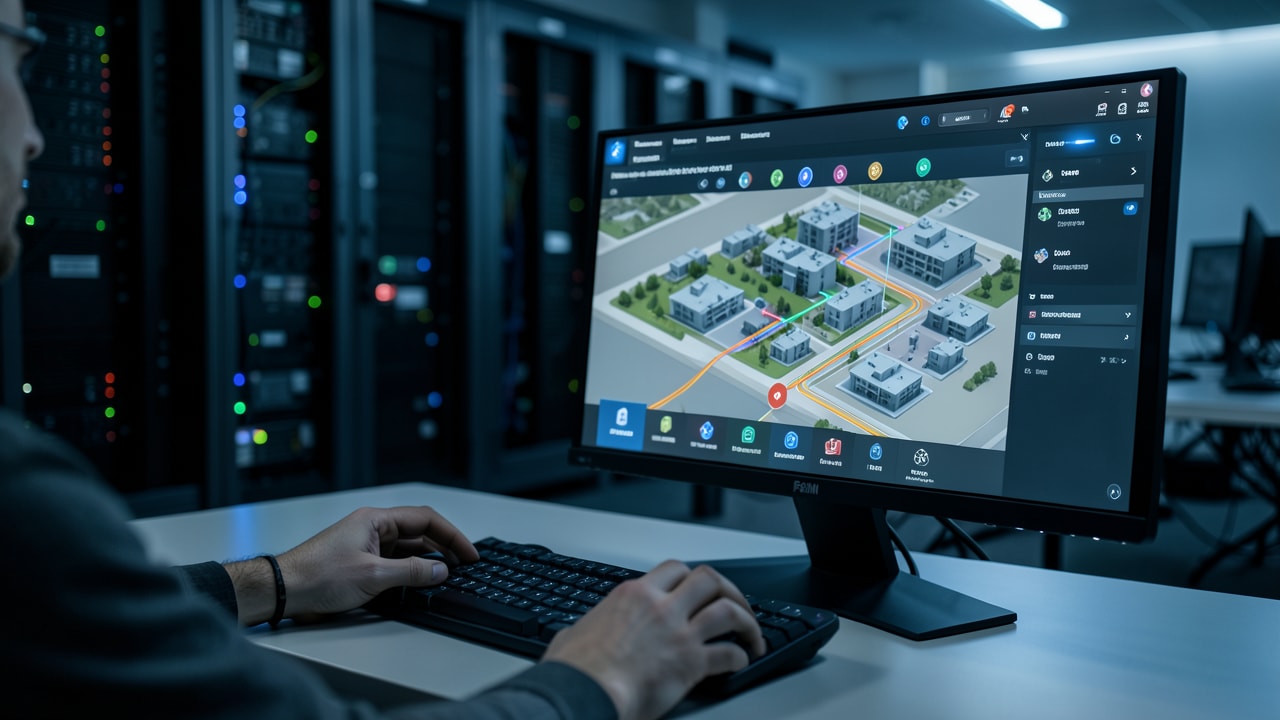



From Detection to Resolution: How Integrated Incident Management Platforms Elevate Security Response