Download Product Ebook
 View all our solutions
 Sky-Walker Architecture
 View all our integrations
 Book Protocol workshop
 Our Company
 Contact Us
 View All Our Case Studies
 Become a PSIM Partner
 Become a Sky-Walker PSIM partner today!
 English
 Français
 Nederlands
Building Management made simple with Sky-Walker: Even across multiple warehouses

Multiple warehouses
As organizations scale their operations, managing buildings becomes increasingly complex, especially when those buildings include multiple warehouses, offices, or mixed-use facilities spread across different locations. For software-driven businesses and industrial operators alike, the challenge is no longer just maintaining infrastructure, but orchestrating safety, comfort, cost efficiency, and operational continuity in real time.
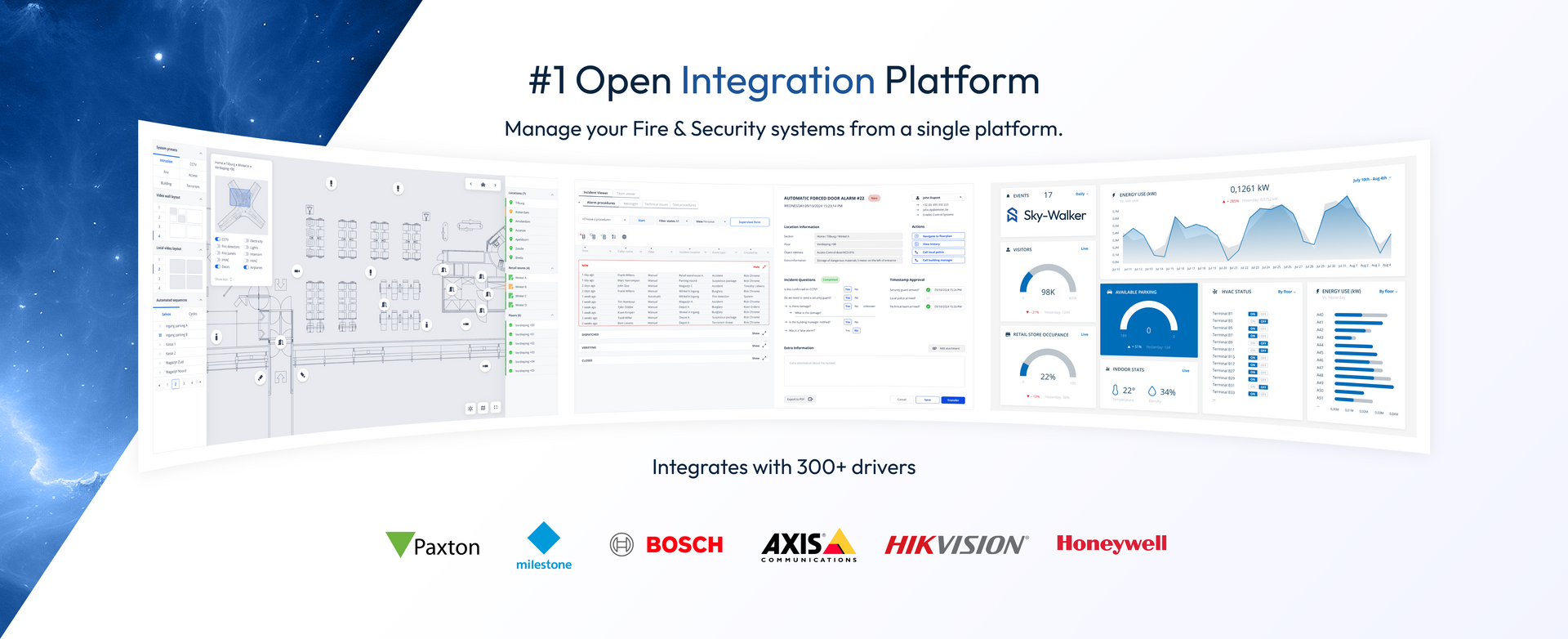
This is where modern Building Management Systems (BMS) and Physical Security Information Management (PSIM) platforms step in. Sky-Walker has been designed specifically to simplify building management by unifying technical, safety, and operational systems into a single, intuitive software platform capable of scaling effortlessly from one site to dozens of warehouses.
Reduce energy and operational costs at scale: case study
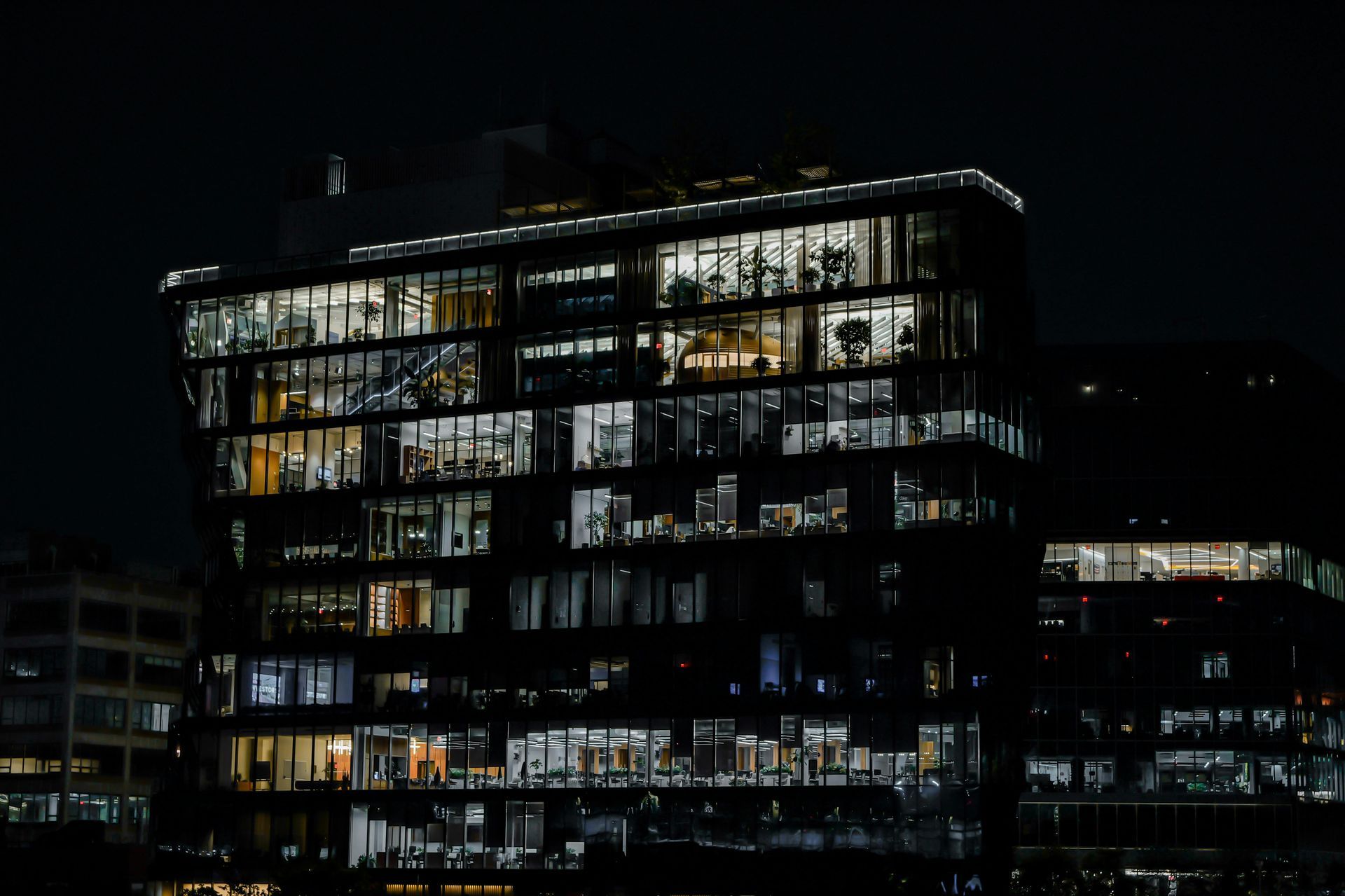
A multi-functional, six-story flexible workspace in central London set out to redefine the modern urban office. With an ambitious goal of becoming a global leader in sustainable and iconic workspaces by 2030, the building faced a challenge common to post-pandemic offices: occupancy was no longer predictable. Systems designed for constant use of HVAC, lighting, and equipment continued running even when large areas were unoccupied, leading to unnecessary energy waste and rising operational costs.
To address this, the client partnered with JLL to reduce energy consumption, carbon emissions, and operating expenses while maintaining a high-quality tenant experience. JLL implemented its smart building platform to track, analyze, and optimize building systems in real time from a single, centralized interface. Using advanced analytics and reporting, the platform identified inefficiencies and enabled automated optimizations, reducing manual interventions, redundant tasks, and unnecessary equipment runtime.
As a result, the building evolved into a fully integrated digital ecosystem focused on both occupants and efficiency. The outcomes were significant: energy consumption dropped by 63,628 kWh per month, operational costs were reduced by approximately 41% (around $13,914 monthly), and carbon emissions decreased by an average of 13.8 tonnes of CO₂ per month, demonstrating how smart building technology can deliver measurable sustainability and performance gains.
reference: https://www.jll.com/en-de/client-stories/london-workspace-reduced-electricity-consumption-by-31-20-in-5-months
Why Building Management Software Matters Today
At its core, a Building Management System exists to protect people, assets, and operations. But in today’s environment, where energy costs fluctuate, occupancy patterns are unpredictable, and compliance requirements are strict, a BMS must do much more than react to alarms.
Sky-Walker approaches building management with one guiding principle: situational awareness first. Operators, technical staff, and decision-makers need immediate visibility into what is happening, where it is happening, and what actions must be taken without navigating disconnected systems or manual processes.
By integrating safety, comfort, and operational systems into a centralized interface, Sky-Walker enables early issue detection, faster response times, and measurable cost savings across single or multiple sites.
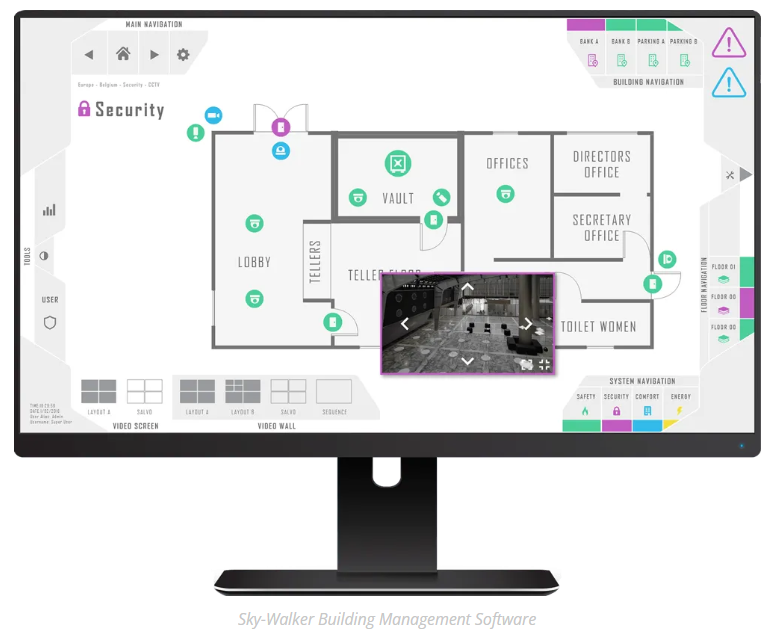
Core Capabilities of Sky-Walker BMS
Sky-Walker consolidates all critical building functions into a unified software layer:
- Alarm handling to detect, prioritize, and resolve technical or security alerts
- Management systems for HVAC, lighting, and technical installations
- Maintenance systems based on real operational data
- User management to control access, roles, and permissions
- Reports and statistics for data-driven decision-making
- Incident management with predefined workflows and automation
These capabilities are presented through a graphical user interface that allows users to navigate floor plans, technical schematics, and system dashboards with ease.
Key Benefits for Complex and Distributed Environments
1. Situational Awareness
Sky-Walker enables operators to quickly identify alarms and events, follow predefined workflows, and minimize operational and safety risks. Every incident is contextualized, showing impacted systems, locations, and recommended actions in real time.
2. Cost Reduction and Energy Optimization
Through intuitive control of HVAC and lighting systems, Sky-Walker helps organizations optimize energy usage. Dashboards and reports highlight inefficiencies, allowing teams to take targeted actions such as adjusting schedules, reducing fresh air intake during winter, or leveraging free-cooling at night during summer.
3. Optimized Maintenance
Rather than relying on fixed schedules, Sky-Walker collects operational hours from equipment such as pumps, lighting, and air handling units. This enables preventive maintenance based on actual usage, reducing downtime and extending asset lifecycles.
4. Structured Incident Management
For critical alarms, technical or security-related, Sky-Walker allows organizations to define complete process flows. Automated and manual actions ensure incidents are handled consistently, even under pressure.
5. Faster Issue Resolution
If a comfort issue arises, such as an office being too cold, technical staff can trace the problem visually through floor plans and system diagrams, pinpointing the root cause without guesswork.
Who Uses a Building Management System?
Sky-Walker is designed to support multiple stakeholders, each with different responsibilities and visibility needs.

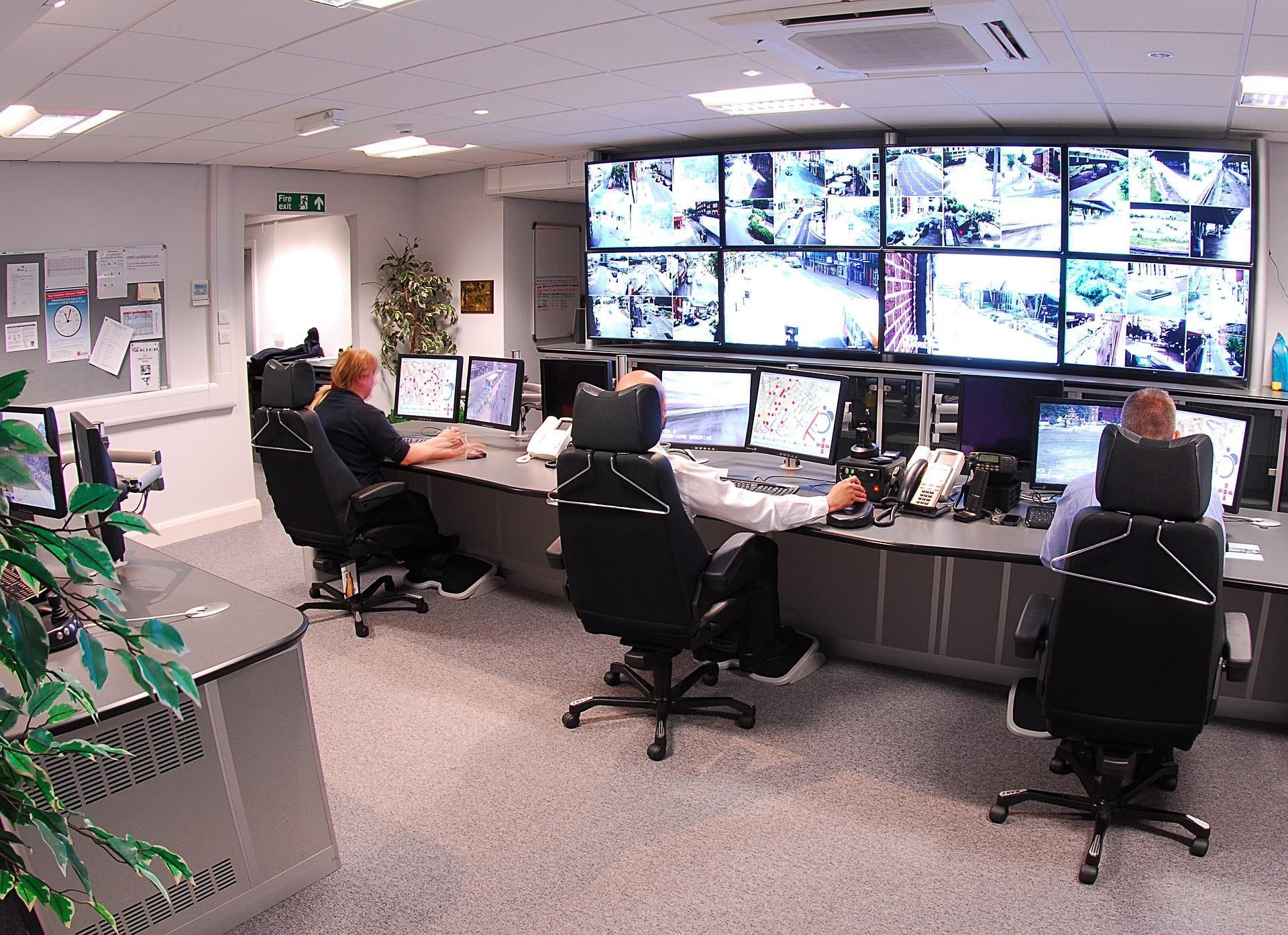

Fire Management as a Critical Layer
Fire safety is one of the most demanding use cases for building management software. Sky-Walker’s Fire Management Software (FMS) integrates fire detection, protection, and alarm systems into a single operational view.
In the event of a fire:
- Detection systems identify the incident
- Alarms are triggered visually and audibly
- Protection systems such as sprinklers activate automatically
- Operators gain immediate situational awareness and can coordinate responders
By integrating fire management with other systems like CCTV and access control, Sky-Walker provides a centralized PSIM platform that supports informed decision-making during high-stress situations, particularly critical in warehouses, hospitals, and large facilities.
Incident Management: From Chaos to Control
Incident management is not just about reacting—it’s about being prepared. Sky-Walker’s incident management module allows organizations to predefine actions, automate responses, coordinate stakeholders, and document every step.
Key advantages include:
- Faster incident resolution through predefined workflows
- Prioritization when multiple incidents occur simultaneously
- Real-time coordination between operators, managers, and external responders
- Data-driven optimization of incident processes over time
All incident data is stored securely, searchable for audits, investigations, or continuous improvement.
Proven Impact of Smart Building Platforms
Real-world implementations of smart building platforms demonstrate tangible results. In one multi-story workspace project, the use of a centralized smart building platform led to dramatic reductions in energy consumption, operational costs, and carbon emissions while maintaining occupant comfort and productivity.
This highlights the value of single-pane-of-glass visibility, automated optimization, and actionable analytics, the same principles that underpin Sky-Walker’s architecture.
Managing Multiple Warehouses with Sky-Walker
Managing a single building is challenging enough. Managing multiple warehouses, each with its own equipment, risks, and operational constraints, requires a platform built for scale.
Sky-Walker enables organizations to:
- Monitor all warehouses from one centralized interface
- Standardize incident and maintenance processes across sites
- Compare performance metrics between buildings
- Maintain consistent safety and comfort standards
By unifying building management, fire safety, and incident response into one customizable software platform, Sky-Walker transforms complex, distributed environments into cohesive, manageable ecosystems, helping organizations stay safe, efficient, and in control no matter how many warehouses they operate.
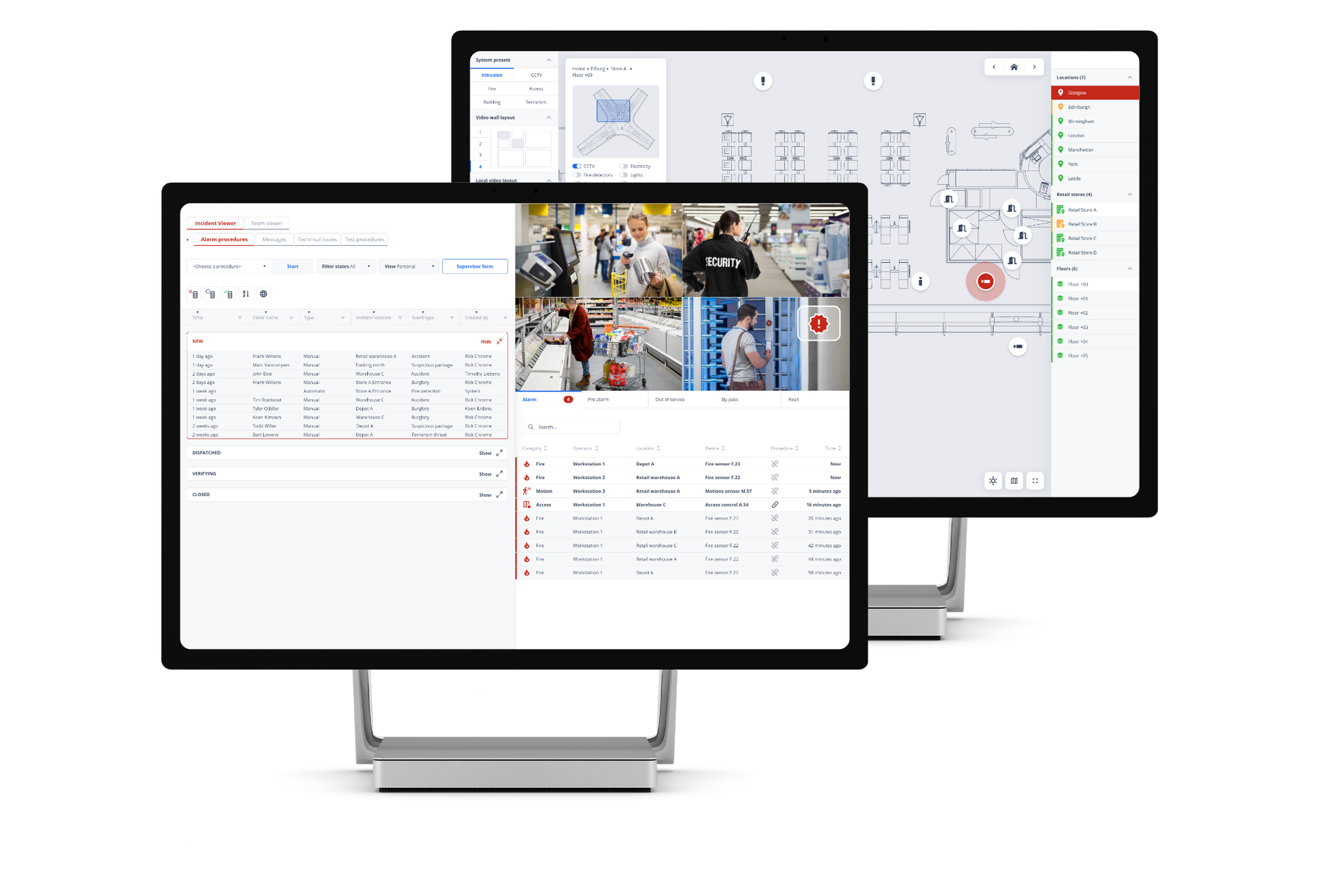
Want to see Sky-Walker in action?
Other blog posts