Download Product Ebook
 View all our solutions
 Sky-Walker Architecture
 View all our integrations
 Book Protocol workshop
 Our Company
 Contact Us
 View All Our Case Studies
 Become a PSIM Partner
 Become a Sky-Walker PSIM partner today!
 English
 Français
 Nederlands
The Integrated Advantage: How Unified Platforms Optimize Smart Building Operations
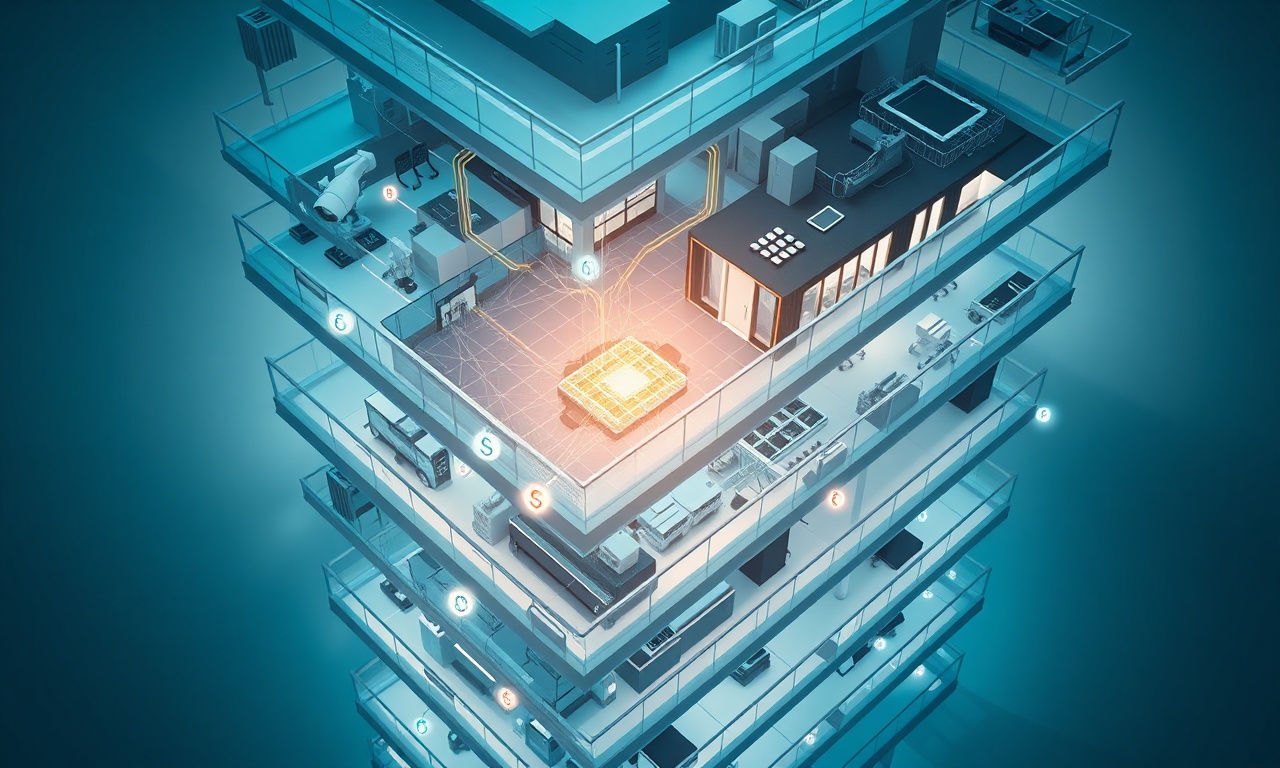
In today's sophisticated buildings, security, safety, and operational efficiency are not isolated concerns. They are interconnected pillars supporting a productive, safe, and comfortable environment. However, many organizations still manage these critical functions through fragmented systems, leading to inefficiencies, delayed responses, and unnecessary operational costs.
Imagine a scenario where your building's fire alarm triggers, but the security cameras in the affected zone don't automatically provide a feed to your operators, and the HVAC system continues to circulate air without adjustments. This common disconnect highlights the limitations of siloed systems. The answer lies in unification: bringing all these disparate technologies together under a single, intelligent smart building integration platform.
The Challenges of Disconnected Building Systems
For facility managers, the daily reality of a disconnected infrastructure can be daunting. You might oversee a multitude of systems, including:
- Security (CCTV, access control, intrusion detection)
- Safety (fire detection, public address, emergency lighting)
- Building Management (HVAC, lighting, energy monitoring)
Each system often comes with its own software, interface, and alarm protocols. This creates significant operational hurdles:
- Information Silos: Critical data remains trapped within individual systems, preventing a holistic view of the building's status.
- Operational Inefficiency: Operators waste valuable time switching between multiple applications to gather information or respond to events.
- Delayed Response: Without a unified overview, identifying the precise location and nature of an incident, or coordinating the appropriate response, takes longer.
- Increased Training Overhead: Staff must be proficient in numerous interfaces, increasing training costs and potential for errors.
- Higher Operating Costs: Inefficient operations, reactive maintenance, and unoptimized energy consumption can lead to substantial financial drain.
The Power of a Unified Integration Platform
A Physical Security Information Management (PSIM) or open integration platform is designed to overcome these challenges by creating a single, centralized hub for all your building's systems. It’s about more than just data aggregation; it’s about contextualizing information and automating responses to create a truly intelligent building.
Key benefits include:
Enhanced Situational Awareness
When security, safety, and building management systems are integrated, operators gain a comprehensive, real-time view of the entire facility. Alarms from different systems are presented on interactive floor plans, allowing for immediate visualization of the event's location and severity. This holistic perspective enables faster, more informed decision-making.
Streamlined Incident Management
A unified platform transforms incident management from a reactive, fragmented process into a proactive, coordinated effort. When an alarm is triggered (e.g., a fire alarm), the system can automatically display relevant CCTV feeds, notify emergency services, adjust HVAC settings to contain smoke, and trigger appropriate public address messages. Standardized workflows guide operators through every step of the response, ensuring compliance and efficiency.
Optimized Operational Efficiency
Integrating building management systems like HVAC software and lighting allows for smart automation and energy optimization. For instance, in unoccupied zones, lighting can be dimmed and temperature adjusted to reduce energy consumption, while security systems remain active. This synergy between systems reduces manual intervention, minimizes human error, and lowers operational expenditures.
Improved Occupant Safety and Comfort
A truly integrated building prioritizes the well-being of its occupants. In an emergency, clear visual guidance on floor plans and automated safety protocols ensure efficient evacuation and immediate support. For day-to-day operations, optimized HVAC and lighting settings contribute to a comfortable and productive environment, dynamically adapting to occupancy levels and external conditions.
Entelec Sky-Walker: Your Unified Smart Building Platform
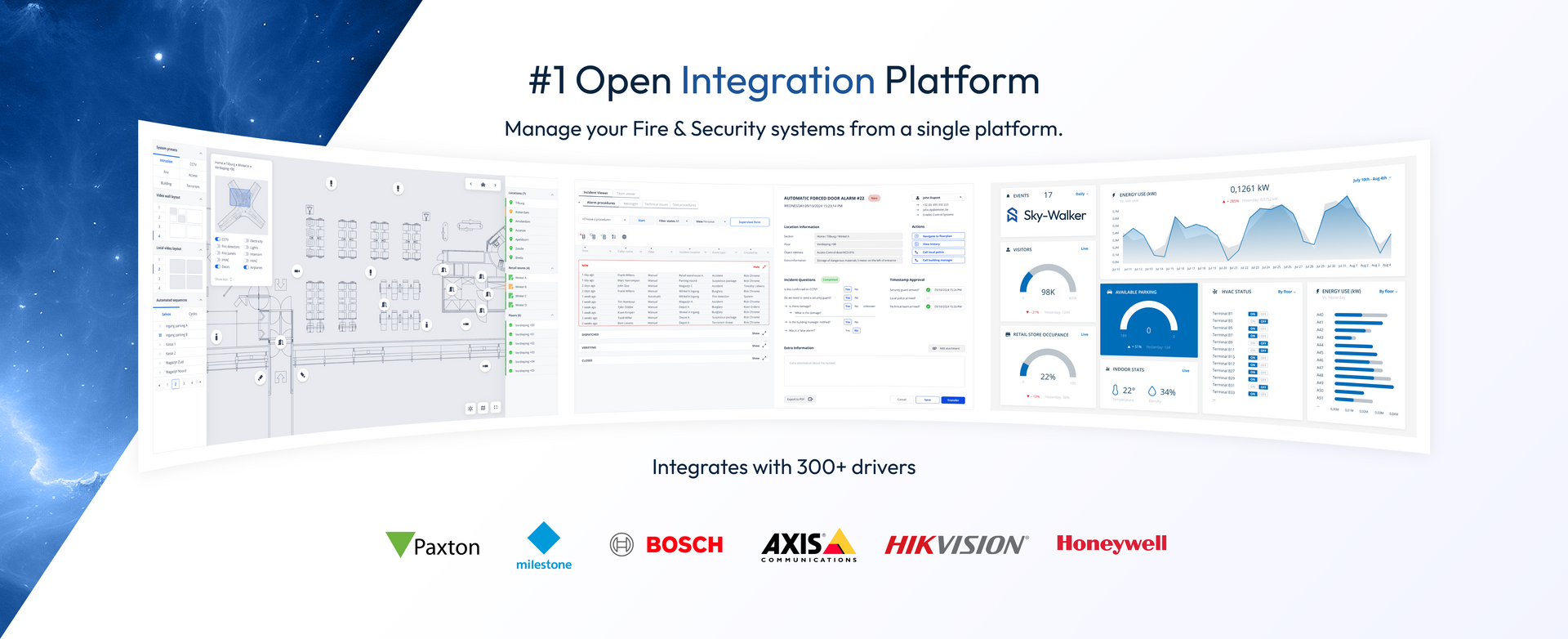
Entelec's Sky-Walker Open Integration Platform is designed precisely for these complex environments. Sky-Walker unifies over 300 different security, safety, and building management drivers, allowing you to integrate existing infrastructure from various manufacturers – from Bosch CCTV and Notifier fire detection to your building's HVAC and energy monitoring systems.
Sky-Walker provides a centralized control room interface that offers a single point of truth for all integrated systems. This means your facility managers can monitor, manage, and respond to every event from one intuitive interface, visualize incidents on dynamic floor plans, and access historical data for advanced dashboarding and reporting.
By leveraging Sky-Walker, organizations can move beyond fragmented operations, achieving a new level of efficiency, safety, and comfort across their entire building portfolio. It allows you to protect your existing investments while preparing your infrastructure for future smart building advancements.
Ready to Unify Your Building Operations?
If you're looking to transform your building from a collection of disparate systems into a cohesive, intelligent environment, explore the power of true integration. Request a live demo of the Entelec Sky-Walker platform today and discover how it can optimize your operational efficiency, enhance safety, and improve occupant comfort.
Other blog posts